


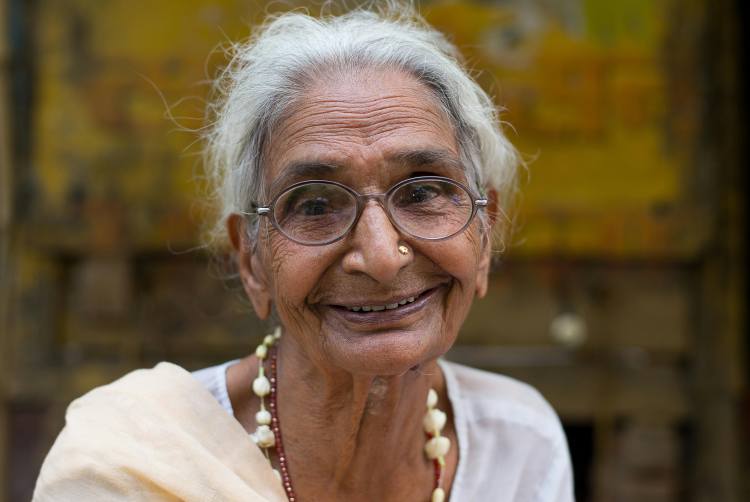
Kerala is not just ageing faster than India. It is showing India what its own demographic future will look like. The state’s elderly population is projected to rise from 4.2 million in 2011 to 8.4 million by 2036, reaching about 22.8% of the population. Kerala’s health dashboard places the 2036 figure at 8.418 million, or 23%. This makes Kerala the earliest and sharpest test of whether Indian states can move from welfare schemes to a functioning system of elderly care.
The case for writing specifically about Kerala is therefore clear. The state combines low fertility, high life expectancy, large-scale migration, and a dense local government network. Its challenge is not only that people are living longer. It is that the family-based care model has weakened before a formal care system has matured.
Kerala’s ageing is also uneven. In some panchayats and municipal wards, the elderly share has already crossed the high-ageing threshold. State-level averages will not capture this variation. Policy must be built on local data.
READ I Care and policy for India’s silver future
From welfare to rights-based ageing policy
Kerala’s ageing policy cannot remain welfare-driven. It must treat older persons as rights-holders and participants in development. The principle is straightforward: dignity, protection, and well-being are entitlements, not discretionary benefits. The state is not assisting the elderly. It is discharging an obligation.
This changes policy design. It demands enforceable service delivery, not schemes layered on intent.
It also changes the narrative. Older citizens are not dependents. They are contributors through mentoring, voluntary work, civic participation, and enterprise. The silver economy is not a slogan. It is a labour, consumption, and services opportunity that Kerala has yet to structure.
READ I India’s ageing population demands a universal pension plan
Migration and care deficit
Migration is central to Kerala’s ageing story. The Kerala Migration Survey 2023 covered 20,000 households and separately studied women, children, and elderly people left behind by migration. Recent research on left-behind older adults in Kerala also shows that long-distance care by migrant children cannot fully replace physical caregiving.
This is the missing policy pivot. Remittances may support consumption, but they do not provide daily care, mobility support, dementia supervision, or protection from neglect. The result is a growing care deficit.
Kerala therefore needs formal home-based care, regulated assisted living, community palliative services, and trained care workers. Panchayats will increasingly become the first responders for elderly persons living alone. That role must be recognised in law, budgets, and staffing.
READ I India’s universities are ageing faster than they can renew
Equity within ageing
Ageing in Kerala is not uniform. Elderly women face higher vulnerability due to widowhood, lower lifetime earnings, and weaker asset ownership. Kerala’s elderly population also has a rising share of the oldest-old, with women forming a large proportion of the vulnerable elderly.
The risks deepen for Dalits, Adivasis, persons with disabilities, and those living alone in rural or migration-affected households.
A generic elderly policy will miss these clusters. A targeted one must begin with them.
Public finance and preventive care
Policy credibility rests on allocation. Without a defined fiscal commitment, intent will not translate into outcomes.
Kerala’s 2026–27 Elderly Budget says the elderly population will double between 2011 and 2036. It also attempts to identify elderly-related expenditure across departments. This is useful. But a budget statement is not the same as delivery architecture.
Preventive care must be the priority. Community fitness programmes, NCD screening, geriatric wards, neurological assessments, adult immunisation, and palliative care cost less than crisis-led institutional care.
Kerala’s health system is capable of this shift. It has not yet prioritised it at scale.
Age-friendly Kerala needs local systems
Kerala has the institutional depth to build an age-friendly system. The elements are known. Health interventions must extend beyond hospitals to community-based care, mobile services, and palliative networks. Social engagement requires day-care centres, clubs, dementia-support environments, and safe public spaces.
Intergenerational interaction must be designed, not assumed. Schools, colleges, and public parks can anchor this.
Urban design must catch up. Barrier-free roads, accessible transport, and age-friendly public infrastructure remain uneven. Local governments are central. The Age-Friendly Panchayat model is the right anchor. Its execution remains patchy.
Data deficit is the binding constraint
Kerala’s ageing policy is constrained by weak data. Most datasets aggregate all individuals above 60. This masks differences between the young-old and the oldest-old. It obscures gendered health outcomes and location-specific vulnerabilities.
LASI provides valuable national and state-level evidence, but it is survey-based and cannot replace a live administrative registry. Census data is outdated. Disease-specific datasets, especially for dementia and cancer, remain inadequate.
There is little disaggregation by income, caste, disability, living arrangements, or migration status. Digital fragmentation across departments compounds the problem.
Kerala needs panchayat-level, continuously updated elderly registries. An Active Ageing Index adapted to local conditions can provide a measurable framework. Without this, monitoring and course correction will remain weak.
Panchayat-level governance is missing
The case for decentralised ageing governance is structural. Kerala’s Panchayat Raj system already manages welfare delivery. Ageing challenges such as social isolation, functional decline, elder abuse, and access to care are local. They require local response.
Yet delivery remains fragmented. Scheme access often depends on ASHA workers or Kudumbashree networks, not a formal administrative structure. The author’s draft rightly identifies this as the core implementation gap.
A panchayat-level system must include ward-level elder welfare sub-committees, a dynamic elderly registry, a designated welfare officer, Gram Sabha-based beneficiary selection, structured management of day-care centres, and an age-friendly checklist for every panchayat.
This must be backed by financial devolution. Pension administration and elderly welfare delivery should move closer to local governments, with clear accountability.
Panchayats must also link upward to district monitoring systems and state-level institutions such as the Social Security Mission and the Elderly Commission. Without this architecture, policy will remain declaratory.
Kerala’s demographic test
Kerala has moved past the first demographic dividend. The working-age expansion phase is over. What remains is the second dividend: productivity gains from an older but healthier and economically active population.
That transition is not automatic. It requires sustained investment in health, skills, care systems, and participation. It requires labour market flexibility for older workers. It requires social protection that works at the doorstep.
Kerala has the advantage of early transition. It also carries the cost of inaction.
Handled well, ageing can expand productivity, savings, and services demand. Mishandled, it will strain households, local governments, and the health system. The choice is administrative, not demographic.