


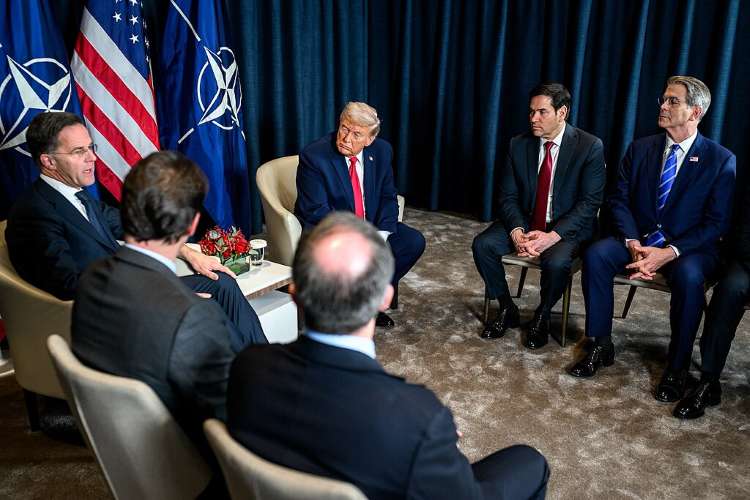
International law depends not only on treaties and institutions, but on the conduct of powerful states. For much of the 20th century, the United States positioned itself as both architect and guardian of the international legal order that prioritised sovereignty, collective security and rules-based governance.
This role was institutionalised through the creation of bodies such as the United Nations, the Bretton Woods institutions, and, later, NATO, which incorporated American power within multilateral frameworks. By promoting norms of non-aggression, dispute resolution and economic interdependence, the US sought to stabilise a post-war world while legitimising its leadership.
Yet, recent US actions in Venezuela, accompanied by unprecedented statements regarding Greenland, signal a destabilising shift revealing growing tensions between power politics and respect for international law principles. These developments raise serious questions about the validity of international law and the authority of the institutions designed to uphold it.
READ I Trump’s ‘golden age’ descends into global chaos
While the US did not launch a conventional military invasion of Venezuela, its approach reflected a pattern of coercive intervention that violated international law, which challenged the principle of non-intervention under Article 2(7) enshrined in the UN Charter.
With regard to the use of force, Article 2(4) of the Charter prohibits not only the use of force but also threats of force against the territorial integrity or political independence of any state. US officials repeatedly declared during Donald Trump’s first tenure (2017-2021) as president that “all options are on the table” regarding Venezuela. More importantly, the US military strike on Venezuela, and capturing of President Maduro on January 3 this year has undermined the long-standing international principle of non-interference in domestic political processes.
While framed as efforts to restore democracy and to provide stability, this move undermines the integrity of multilateral mechanisms such as the UN and regional organisations, reinforcing the perception that international law is applied selectively in line with the strategic interests of powerful nations. The Venezuelan case thus illustrates a broader transformation from multilateral engagement and legal justification to unilateral and political pressures as an acceptable tool in foreign policy.
READ I Trump’s world order breakdown echoes the 1930s
International law and imperial tendencies
US statements on Greenland represent a deeper challenge to modern international law. Greenland is not merely territory; it is home to an indigenous population with recognised rights under international law. Any transfer of sovereignty without the free and informed consent of its people would violate fundamental norms of self-determination articulated in the UN Charter and subsequent human rights instruments.
The US is increasingly expressing its interest through proposals to purchase the territory, reflecting the logic of territorial competition ill-suited to modern international law, as Greenland is not a commodity but a self-governing territory within the Kingdom of Denmark, whose people possess the right to self-determination.
The US already operates under the treaty framework that grants it extensive security and defence access to Greenland, reflecting its concerns in the Arctic region. Yet public gestures towards acquiring the territory, reframed as a cooperative security arrangement, reveal a transactional pursuit of control to obtain strategic advantage, undermining the principle of self-determination.
READ I Iran protests and the limits of the US Venezuela playbook
If major powers normalise this logic, China or Russia may invoke similar justifications to expand their influence or control in line with their own strategic interests. In such a case, the danger does not only lie in individual violations but also in their cumulative effect on the international legal system.
Economic integration, legal interdependence and mutual trust have been stabilising forces in international law and have benefited all major economies, including the US. However, the increasing weaponisation of trade restrictions, selective trade restrictions and the ensuing mutual distrust weaken international institutions, leading to fragmentation and erosion of international law.
At the core is the normalisation of transactional sovereignty. When a permanent UNSC member treats territory as a negotiable commodity, it weakens the normative barrier that prevents similar claims elsewhere and undermines the legal consensus that borders are not for sale and that the political integrity and territorial sovereignty of the state must be respected.
Such cases illustrate how international law is increasingly strained in an era of intensifying geopolitical rivalry, not through open rejection of its principles, but through selective application and strategic disregard by powerful nations.
Impact on international law and institutions
Together, US actions toward Venezuela and statements about Greenland reflect a broader pattern of loss of trust toward international institutions. The UN, the International Court of Justice and other multilateral bodies rely heavily on the cooperation of powerful states to maintain their authority and funding. When those states act unilaterally or dismiss institutional processes, the system collapses.
In the Venezuela case, the US largely bypassed the UN Security Council, where legal authorisation for coercive measures would have been debated. In doing so, it reinforced the idea that global governance mechanisms are persuasive rather than obligatory.
This shift is especially striking when viewed from a historical lens, considering the US’ role in shaping the international legal order after 1945. Even during the Cold War, the US often sought legal or institutional justification for its actions, whether through the UN, NATO or regional alliances.
The post–Cold War era marked the beginning of a change. The interventions in Kosovo, Iraq and later Libya signalled a growing willingness to act without explicit legal authorisation. What distinguishes the more recent period is not merely intervention, but indifference to legal justification altogether. The emphasis has shifted from defending international law to asserting power and establishing a unipolar world order.
The US approach in Venezuela and Greenland symbolises a broader violation of the principles that once formed the basis of American global leadership, as enshrined in the UN Charter. While the US remains a central actor in international affairs, its credibility as a defender of international law has been damaged by policies that prioritise short-term benefits over long-term legitimacy based on self-interest.
Amit Upadhyay is Associate Professor at the Jindal Global Law School, O.P. Jindal Global University, Sonipat, Haryana. Abhinav Mehrotra is Associate Professor at the Jindal Global Law School, O.P. Jindal Global University, Sonipat, Haryana. Originally published under Creative Commons by 360info
