


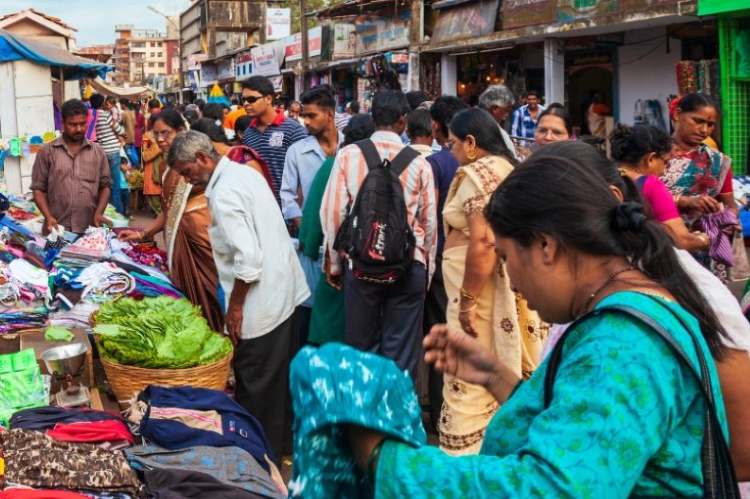
More than two billion workers, or over 60% of the global labour force, earn their livelihood in the informal economy. This makes informality not a marginal exception, but a central feature of the global labour market. It also makes the subject difficult to define, measure and govern.
The informal economy operates outside the full reach of government regulation, taxation, labour law and social protection. Much of it consists of small-scale economic activity. Its spread across regions, sectors, and occupations makes it hard for economists and policymakers to document. This is why it is often described as the shadow economy.
Informality is especially visible in micro and small enterprises. These firms provide livelihoods to millions, but often without stable contracts, safe working conditions, predictable wages, or access to formal credit and insurance. For many workers, informal employment means low productivity, unsafe workplaces, irregular income, and little bargaining power.
READ I Informal sector jobs expose India’s productivity crisis
Informal economy and regulatory failure
The persistence of informality is usually linked to weak regulation, poor enforcement, low education levels, poverty, and limited access to economic resources. These factors do not act separately. They reinforce one another.
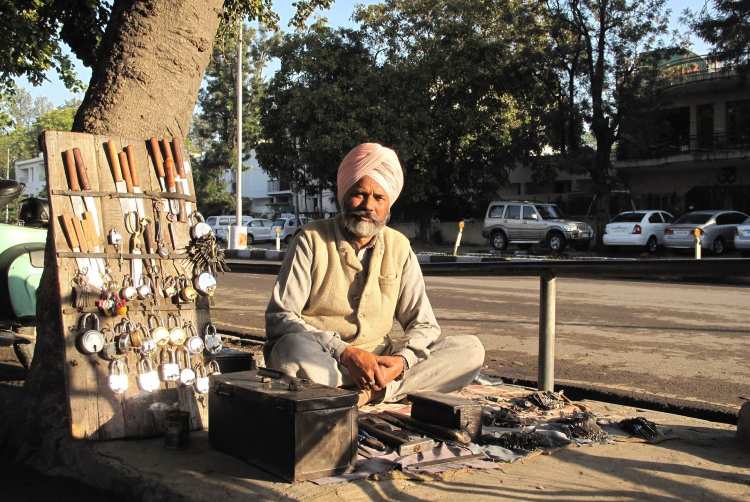

A worker with little education and no savings has limited access to formal employment. A small enterprise facing high compliance costs may remain unregistered. A migrant worker without documentation may accept insecure work. A woman excluded from formal labour markets may enter home-based or casual work. In each case, informality reflects both economic compulsion and institutional failure.
The difficulty is not only that informal activity escapes regulation. It also escapes measurement. Legal production of goods and services can remain hidden from public authorities when businesses avoid registration, taxes, or labour rules. This makes informality hard to observe and harder to reform.
READ I India’s informal sector is growing, but not graduating
Informal labour and the dualist view
One major explanation of informality comes from the dualist approach. It sees the informal sector as separate from the formal economy. The formal sector is capital-intensive, regulated, and growth-oriented. The informal sector is labour-intensive, low-productivity, and weakly protected.

Keith Hart, the British anthropologist who helped formulate the idea of the informal sector, studied low-income activities among migrant workers. His work showed that informal work emerged from the dual structure of urban labour markets. Formal employment could not absorb all workers. Those excluded from it created livelihoods outside its rules.
This view remains relevant. Lack of jobs, low wages, unemployment, and underemployment continue to push large numbers into informal work. The informal economy is not always a matter of choice. For many, it is the only available route to survival.
READ I Extreme heat stress draining India’s gig workforce
Informality and structural inequality
The dualist view, however, does not fully capture the complexity of informal work. The formal and informal economies are not always separate. They often depend on each other. Formal firms may outsource work to informal units. Contractors may use informal labour to reduce costs. Supply chains may rely on workers who remain invisible in official records.
This gives informality a structural character. It is not merely the residue of underdevelopment. It is also produced by labour markets, enterprise structures, and regulatory systems.
The WIEGO model of informal employment captures this layered structure. It distinguishes between regular informal workers, casual informal workers, unpaid workers, industrial outworkers, and other vulnerable categories. This pyramid shows that informality is not a single condition. It is a hierarchy of insecurity.
Some workers are self-employed. Others are wage workers without contracts. Some work from home. Others are attached to factories, farms, construction sites, or urban services through informal arrangements. Their legal status differs, but the common feature is weak protection.
Gig economy and new informality
The rise of the gig and platform economy has added a new layer to the informal labour debate. Ride-hailing, food delivery, logistics, freelance marketplaces, and digital service platforms have changed the relationship between workers and employers.
These platforms use technology to match labour supply with demand in real time. They often classify workers as independent contractors rather than employees. This gives firms flexibility, but leaves workers exposed to income volatility, lack of benefits, and limited legal recourse.
Platform work also introduces algorithmic management. Digital systems allocate tasks, monitor performance, set incentives, and influence compensation. This control is less visible than a supervisor in a factory or office, but it can be equally powerful. Workers may be called independent, but their autonomy is limited when algorithms decide access to work.
The gig economy therefore does not eliminate informality. It modernises it. The worker may use a smartphone, but the underlying vulnerabilities remain familiar: uncertain income, weak protection, and limited bargaining power.
Determinants of informal economic activity
Several factors sustain informal employment and informal enterprises.
Absence of government regulation: Informal activity often takes place outside registration, taxation, and labour law. Businesses may be unregistered. Workers may not appear in official employment records. This limits the state’s ability to regulate, tax, or protect them.
Lack of social protection: Informal workers usually lack health insurance, pensions, unemployment support, paid leave, and workplace injury protection. This makes economic shocks more damaging for workers and their families.
Low education and skills: Informal labour markets often absorb workers with limited access to schooling, training, and formal credentials. Low skills reduce access to formal employment and keep workers trapped in low-wage occupations.
Poverty and economic vulnerability: Many workers enter informal employment because formal jobs are unavailable. Informality then becomes both a result and a cause of poverty. Low earnings prevent investment in skills, health, and enterprise growth.
Unregistered enterprises: Many small businesses operate without licences, registration, or formal accounts. Some do so to avoid compliance costs. Others lack the capacity to navigate formal systems. Their informality limits access to credit, markets, and state support.
Marginalisation and exclusion: Migrants, women, minorities, and socially disadvantaged groups are often overrepresented in informal work. Barriers to education, mobility, finance, and formal employment push them into insecure occupations.
Underemployment is another important feature. Informal workers may hold several jobs, work irregular hours, or accept part-time employment that does not match their skills. Such work may generate income, but rarely provides stability.
Informal economy and policy challenge
The informal economy cannot be understood only as illegality or regulatory evasion. It is also a labour-market response to weak formal job creation, exclusion, and poverty. That is why simplistic enforcement cannot solve the problem.
The policy challenge is to reduce vulnerability without destroying livelihoods. Registration must become easier. Compliance must be less punitive for small firms. Social protection must be portable. Skills programmes must reach informal workers. Labour regulation must recognise the realities of platform work, casual employment, and home-based production.
Informality will not disappear through definition alone. It must be measured better, protected better, and gradually integrated into formal systems. The first step is to recognise its scale. The next is to stop treating it as an exception.
Ashraf Rehman is a Green Fellow at The Green Institute and a columnist focusing on development and policy issues.