


Once a remote and largely inaccessible region, the Arctic has become the focus of far-reaching international developments. In recent years, competition among major powers – USA, Russia and China above all – has intensified, threatening to erode the region’s long-standing cooperative model, often summed up by the slogan “High North, Low Tension”. A particularly revealing case is Greenland, which has emerged as a focal point of Arctic competition, as underscored by US President Donald Trump’s stated ambition to secure control of the island.
Since the end of the Cold War, the Arctic had been widely regarded as a rare example of sustained international cooperation, despite underlying disagreements among some of its most influential states.
In 1996, the Arctic states, a grouping of eight countries including USA, Russia, Canada and Denmark, established the Arctic Council. This intergovernmental body is tasked with promoting sustainable development and scientific cooperation across the region. Today, however, great-power rivalry increasingly appears to be taking on the characteristics of a zero-sum game, with states focused on maximising relative advantage. This shift is not limited to so-called revisionist powers such as Russia and China, but also involves the United States, the main guarantor of the existing international order. Inevitably, this evolving geopolitical landscape has drawn the Arctic ever more firmly into global strategic calculations.
READ I Greenland autonomy and the American push into the Arctic
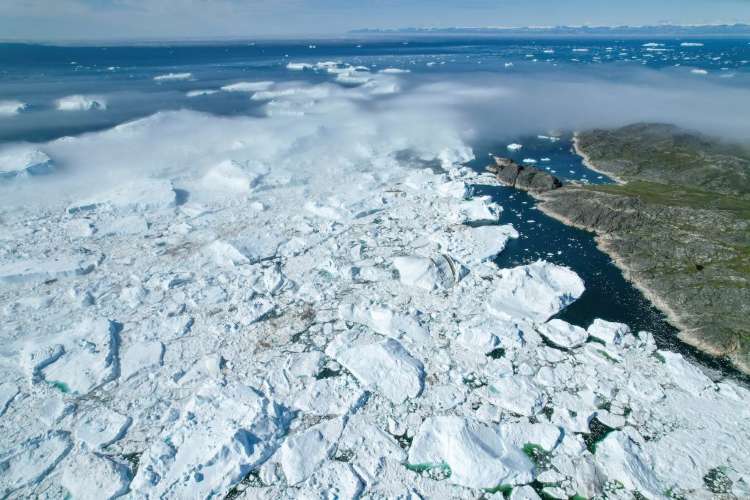
Competition in the region is further fuelled by another structural transformation: climate change. Global warming is already reshaping the Arctic, long shielded by extensive ice cover. Temperatures in the region are rising four times faster than the global average. Data published by NASA shows September sea-ice extent has declined by about 12 percent per decade compared with the 1981–2010 average. A 2023 report by the Intergovernmental Panel on Climate Change found that the share of multi-year ice aged at least five years fell by around 90 percent between 1979 and 2018.
Melting ice is creating new security challenges but also economic opportunities, from resource extraction to the development of shipping routes, inevitably attracting the interest of Arctic and non-Arctic states alike.
READ I Europe’s Greenland dilemma as Trump threatens force
Greenland at the heart of Arctic competition
Greenland encapsulates several major global trends intersecting with Arctic stability and sustainable development, linking local, regional and global dynamics.
The world’s largest island is home to fewer than 60,000 people, making it one of the least densely populated territories on the planet. Formally part of the Kingdom of Denmark for centuries, its relationship with Copenhagen has evolved from colonial rule to overseas territory and, eventually, to recognised semi-autonomous status. This autonomy has fuelled independence movements despite persistent socio-economic constraints.
Greenland, which has a predominantly indigenous Inuit population, remains heavily dependent on Danish financial transfers, estimated at around 500 million euros a year, accounting for roughly half of government revenues and about 20 percent of its GDP. While support for independence has grown, the outcome of the most recent local parliamentary election in March 2025 – with Denmark’s ruling Social Democratic Party suffering big losses in municipal elections – suggested a broadly shared and cautious approach to the process.
Against this complex domestic backdrop, external actors have sought influence on the island. US interest in Greenland predates the Trump administration. Trump’s declaration that Washington needed control of the island “one way or another” for reasons of “absolute” national security highlighted its strategic value.
Greenland’s location had already drawn US attention at the start of the Cold War. Since 1951, Denmark and the United States have maintained a defence agreement covering Greenland, which hosts the Pituffik Space Base, formerly known as Thule Air Base, a key US facility supporting NATO’s space surveillance and missile-defence systems.
READ I Trump’s ‘golden age’ descends into global chaos
Melting ice and new maritime routes
After the Cold War, Western countries reduced their focus on the Arctic, a trend that has reversed in recent years. Rising tensions with Russia and China, combined with ice melt and studies highlighting Arctic mineral potential, have renewed interest from both governments and private actors.
Trump’s 2019 proposal to buy Greenland was not unprecedented. In 1946, President Harry Truman offered to purchase the island from Denmark, largely because of its uranium reserves, seen as critical for military and civilian development.
Ice melt is also opening new possibilities for international shipping. Greenland’s geography places it between two potential Arctic sea routes: the Northwest Passage, running along North America’s northern coast, and the Transpolar Sea Route, which would cross the Arctic Ocean near the North Pole. As ice retreat accelerates, these routes could shorten travel times and reduce transport costs. While the transpolar route remains unlikely in the medium term, it could prove transformative if ice conditions deteriorate further.
Projections suggest the Arctic could experience its first ice-free day before 2030. In any case, Arctic routes could offer alternatives to traditional chokepoints such as Suez and Bab el-Mandeb, which are increasingly exposed to security risks. Arctic transit increased by 37 percent between 2013 and 2023, driven by ice melt and stronger political engagement. For now, most Arctic shipping occurs along the Northern Sea Route off Russia’s coast, supported by more developed infrastructure and strong political backing. Still, economic incentives are prompting governments to plan the development of the other two routes.
Greenland could play a significant role in the supporting infrastructure for Arctic shipping, providing ports, refuelling services, monitoring and security. Yet turning these ambitions into reality would require substantial investment, skilled labour and prolonged ice-free periods. The Intergovernmental Panel on Climate Change estimates a 10–35 percent probability that the Arctic will be ice-free in September by the end of the century if global warming stabilises at 2°C.
Resources, minerals and strategic rivalry
At the same time, Greenland’s strongest pull lies in its natural resources, ranging from oil and gas to critical minerals. The US Geological Survey estimates that Greenland may hold up to 17.5 billion barrels of oil and 4 trillion cubic metres of gas. During the 2010s, Greenland sought to develop and monetise these resources, encouraged by high oil prices. However, exploration costs remain extremely high, at around US$ 100 million per offshore exploratory well under favourable conditions.
Harsh weather and limited infrastructure have undermined economic feasibility, while growing environmental concerns over climate change led Greenland in 2021 to suspend the approval of new exploration licences.
Climate policy and the energy transition have since renewed interest in Greenland’s mining sector. The island is rich in critical minerals such as graphite, copper, rare earths, lithium and uranium. Ice retreat could facilitate exploration and extraction, attracting governments and private companies alike.
Since Greenland controls its subsoil resources, mineral development is seen as a pathway to diversification and greater independence from Denmark. The island could emerge as a strategic player in critical mineral value chains, essential for digital, military and clean-energy technologies.
Because of their economic importance, critical minerals have become central to global geopolitical and industrial competition. Western economies remain heavily dependent on a small number of suppliers, notably China, which dominates refining and processing through decades of industrial policy, state support and fewer environmental constraints, reinforced by an assertive mineral diplomacy. Western governments are now trying to close that gap through diplomacy and investment, a process that has inevitably drawn Greenland into focus.
Estimates suggest Greenland hosts at least 39 of the 50 minerals considered critical to US national and economic security, and 25 of the 34 minerals identified by the European Commission as strategically important.
In November 2023, the European Union signed a memorandum of understanding with Greenland to promote a strategic partnership on sustainable raw-material value chains. Greenland’s natural resources minister has warned, however, that the island will not wait indefinitely for transatlantic partners to deliver concrete results.
Structural limits and unresolved trade-offs
Turning potential into reality depends on more than geology alone. Investment capacity, human capital, infrastructure, market conditions and political will are equally decisive, and Greenland faces significant constraints in each area. It is therefore unsurprising that its resource potential has yet to translate into large-scale success. As with US interest in Greenland’s uranium during the post-war period, today’s renewed focus reflects a return to older strategic patterns.
Extraction alone does not guarantee economic security. Investments must also extend to refining and processing to reduce dependence on China. Yet these activities carry significant environmental costs, often triggering local opposition.
In 2021, due to concerns over environmental risks, Greenland halted development of the Kvanefjeld rare earth and uranium project in the island’s south. Building alternative, sustainable value chains would require close cooperation among Western partners. Greenland’s mining future, and the competition surrounding it, illustrates how local, regional and global dynamics are increasingly intertwined.
Climate change is opening new opportunities for the Arctic and for Greenland in particular. Whether these translate into lasting political and economic gains will depend on how structural socio-economic and environmental challenges are addressed. Without overcoming at least the most critical constraints, ice melt alone will not ensure an expansion of Greenland’s mining sector capable of delivering broad-based benefits.
Pier Paolo Raimondi is a Senior Researcher at the Energy, Climate and Resources (ECR) Program of the Istituto Affari Internazionali (IAI) and a PhD Candidate at Catholic University of the Sacred Heart, Milan. His main research activity is related to energy markets, energy policy as well as energy geopolitics and geoeconomics. Originally published under Creative Commons by 360info
