


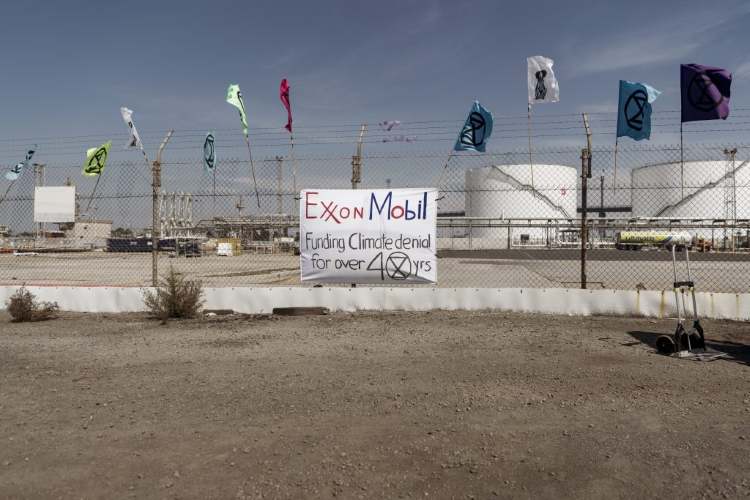
Political donations by fossil fuel lobby: Australia, like many nations around the world, has failed to implement climate policies that are consistent with the dire warnings of climate scientists. One of the key reasons for that has been a barrage of lobbying from big corporations that stand to lose if they are forced to reduce their carbon pollution – think ExxonMobil and Chevron, or closer to home Woodside and Santos.
Many of these corporations have known for decades that the fossil fuels they produce are heating the planet, but instead of transitioning away from fossil fuels they have spent hundreds of millions of dollars denying the science of climate change and lobbying to defeat one climate policy after another.
READ I AI oligarchy could break democracy’s old bargain
Fossil fuel lobby and its tactics
The biggest lobbyists are often the biggest polluters because they have the most to fear from climate policies that aim to reduce their emissions. In Australia some of the most prominent are AGL, BHP, Rio Tinto and Woodside. For example, in the gas industry Woodside has a long history of lobbying against climate policies in Australia and providing large political donations to ensure their lobbyists get access to political leaders. In the lead up to the last Federal election, Woodside spent almost $100,000 on donations to both major parties.
Fossil fuel lobby also funds trade associations, such as Australian Energy Producers, Coal Australia, and the Minerals Council of Australia (MCA) to lobby on their behalf. These groups alone spent $1.53 million on donations to Labor and the Coalition in the last election cycle. The MCA even paid for one of their own staff to work inside the opposition leader, Peter Dutton’s, campaign headquarters. None of this is new, indeed, such as been the influence of these groups that their self-proclaimed title as the Greenhouse Mafia, which goes back to the late 1990s, is not without exaggeration.
And if that’s not enough, many of the peak business bodies, such as the Business Council of Australia (BCA), have frequently run campaigns to weaken climate policies as well. For instance, in 2023 the BCA opposed the Victorian Government’s plan to ban gas connections to new dwellings. In 2025, the BCA commissioned modelling used to emphasise the costs of meeting greenhouse gas emissions targets in their lobbying campaign.
Research has shown that it is not only oil, gas and coal companies, that have been major opponents of climate policy, other industries have engaged in climate obstruction too. Take the campaign run by the Federal Chamber of Automotive Industries (FCAI) in 2022, which represents carmakers such as Toyota, to weaken fuel efficiency standards. Investigations and leaked documents, revealed that the FCAI lobbied government ministers, government departments, and ran a PR campaign to delay Australia’s transition to electric vehicles. This included downplaying the potential of EVs in Australia, promoting internal combustion engines, and making misleading statements about the costs of the proposed policy.
Lobbying, donations the tip of the iceberg
When we think about lobbying, we often think about lobbyists walking the halls of parliament and big corporations giving money to MPs with the hope of a meeting or favourable decision.
The truth is that corporations and wealthy individuals deploy much more than lobbying and donations to influence policy outcomes. This includes everything from media ownership to channelling money into PR firms, think tanks, and universities. For example, public relations firms collect intelligence on opponents (such as environmental NGOs), conduct industry-friendly research, design advertising campaigns, launch front groups, and undertake opinion polling, among other activities – all with a view to influencing policy.
In Australia PR firms are often behind the creation of front groups designed to manufacture real or imagined community support for fossil fuels or opposition to climate policies – so-called “astro-turfing”. A recent case is the creation of Australians for Natural Gas, which appears as a grassroots organization that supports pro-gas policies, but was set up by the chief executive of gas company Tamboran Resources, with help from PR firm Freshwater Strategy.
Another is Australians for Prosperity that campaigned at the last election. Again, it sounds like a community group, but it was only revealed after the elections that almost its entire budget came from Coal Australia, which gave $3.68 million. Coal Australia also funded other fake groups, such as Energy for Australians to the tune of over $1 million, which ran anti-Labor ads at the election.
As we head into another summer fuelled by a changing climate, where severe heatwaves and bushfires are an increasing risk, the only way to cut the emissions at the speed and scale required is to put in place policies that end the burning of oil, gas, and coal. But this will require all Australian governments to stare down the lobbyists and their donors who want to keep making profits from the status quo.
Christian Downie is a Professor in the School of Regulation and Global Governance at the Australian National University, where he is the Director of the Governing Energy Transition (GET) Lab. Originally published under Creative Commons by 360info
