


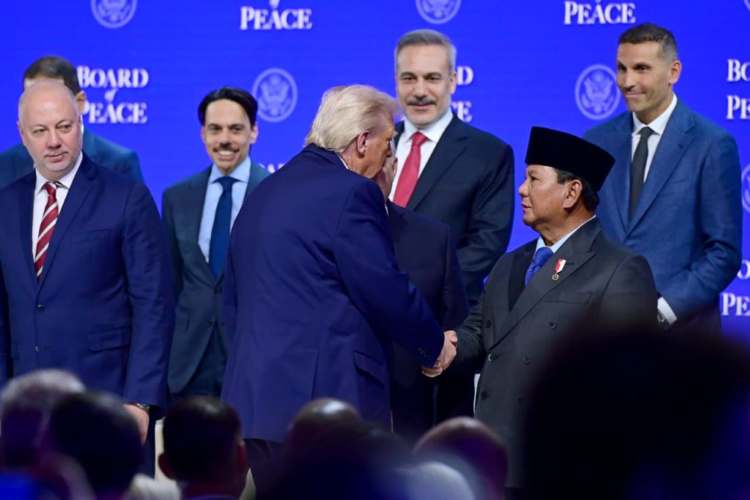
Indonesia faces a strategic choice as pressure mounts at home to withdraw from US President Donald Trump’s Board of Peace amid the escalating US-Israel-Iran conflict. Former minister for Politics, Legal and Security Affairs and Vice President candidate Professor Mahfud MD recently noted that leaving the BoP would likely not cause significant losses and could be done easily if the government is “not being held hostage”.
President Prabowo Subianto may therefore need to reassess Indonesia’s decisions, especially as the country is increasingly viewed as aligning with US interests—from joining the BoP to signing one-sided trade agreements with Washington. This perception raises concerns that Indonesia is losing its independence in global affairs and drifting away from its long‑standing, free‑and‑active foreign policy.
At the same time, President Prabowo has expressed readiness to “evaluate” Indonesia’s role in the BoP. Indonesia has offered to mediate between the US and Iran, but the chances of success remain low. Instead, the current situation should prompt the government to reconsider whether the BoP framework is still relevant and effective for Indonesia’s foreign‑policy goals.
READ I Why a post-Khamenei Iran may resist US designs
Indonesia’s options within the Board of Peace
Indonesia’s role in the BoP during the ongoing conflict in West Asia will likely follow several directions.
First, Indonesia is trying to maintain neutrality by offering to facilitate dialogue and urging all parties to prioritise diplomacy. The Iranian Embassy in Jakarta welcomed this offer, although no concrete steps have followed. Iran’s ambassador stated that both Indonesia and Iran are influential middle powers with the potential to promote peace, and that closer cooperation could strengthen regional stability.
Indonesia has also increased communication with Middle Eastern countries, shown by its intensified diplomatic engagement with Iran, the United Arab Emirates, and Saudi Arabia.
Second, Indonesia is expected to remain in the Board of Peace despite criticism and calls to withdraw. President Prabowo has assured local Islamic clerics that if he sees no benefit for Palestine and finds that it is not in line with Indonesia’s national interests, he will withdraw. The government views the BoP as an important platform for addressing the Israel–Palestine issue, allowing Indonesia to defend Palestinian interests even though Palestine is not represented on the board.
Third, the conflict presents an opportunity for Indonesia to strengthen its image as a peace‑oriented country. If Indonesia succeeds in facilitating dialogue, it could position itself as a balancing actor contributing to global stability. Mediation efforts may also help ease economic pressures, especially with rising oil prices.
READ I Iran conflict: Gains, risks and regional implications of the US
Membership in the BoP as a strategic tool
Although withdrawing from the Board of Peace may appear to be an option, Indonesia would likely lose bargaining power with the United States if it left. Indonesia’s long‑standing strategy is to avoid conflict with major powers such as China and the US while gaining selective advantages, especially in trade negotiations.
This raises a key question: would Indonesia’s geopolitical position become too closely tied to the US? The answer is complex. Indonesia’s trade, investment, and import ties with the US already limit its freedom to some extent. Its Board of Peace membership and efforts to maintain good relations with Washington reflect a cautious approach aimed at avoiding clashes with a major power.
Openly criticising US actions in Iran could also disrupt Indonesia’s diplomatic agenda, particularly within the Board of Peace. Offering mediation allows Indonesia to maintain balance and promote de‑escalation without directly confronting Washington.
Indonesia is navigating a difficult situation during the US-Israel vs. Iran conflict while trying to assert itself as a middle power committed to peace in Board of Peace even as it faces criticism and economic pressures. This issue is important because Indonesia—long a supporter of Palestine and without diplomatic ties to Israel—is now part of a platform where unlikely actors appear together.
As Indonesia considers reviewing its Board of Peace membership, the decision will shape its future position in the board and its efforts to support Palestinian self‑determination.
Teuku Rezasyah teaches International Relations at Padjadjaran University in Bandung and works as a policy consultant for the Indonesian government and parliament. Originally published under Creative Commons by 360info
