


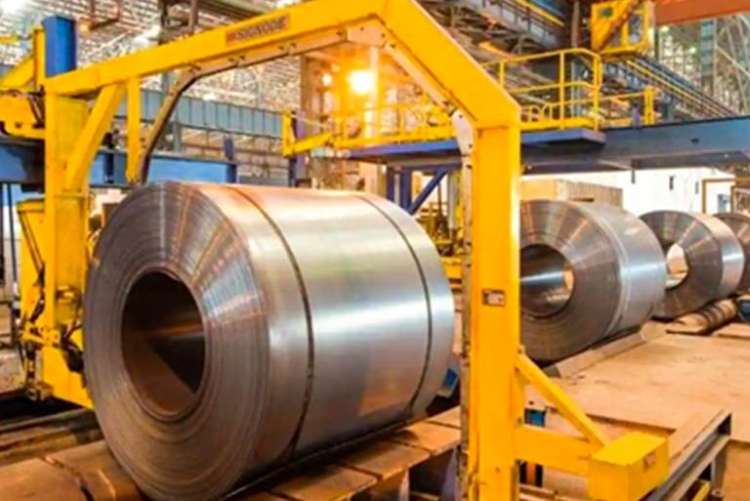
India’s steel industry has entered a zone of unusual comfort. It has scale, demand, and policy support. What it does not yet have is enough global competitiveness. That is the central paradox of the sector today.
The numbers tell part of the story. The National Steel Policy of 2017 had set what then looked like an ambitious target: 300 million tonnes of crude steel capacity by 2030-31. India is now much closer to that target than seemed likely a decade ago. Official data show crude steel capacity at 200.33 million tonnes in 2024-25, while crude steel production reached 168.4 million tonnes and finished steel production 160.9 million tonnes in 2025-26. Finished steel consumption stood at 163.7 million tonnes.
This is not a sector short of demand. India is still under construction. Highways, railways, ports, warehouses, factories, housing, industrial corridors and urban infrastructure will continue to absorb steel for years. Unlike China, where a slowdown in construction has created excess capacity and forced mills to export aggressively, India’s problem is not weak domestic demand. It is almost the opposite. The domestic market is so attractive that it may have bred a degree of complacency.
READ I Iron ore production needs to match steel expansion pace
Steel industry must convert capacity into competitiveness
That complacency must now be shed. A country that is the world’s second-largest producer of steel cannot remain content with serving a protected and expanding home market. Indian producers must learn to compete abroad, especially in geographies where they have natural advantages. West Asia is an obvious example. Saudi Arabia, the UAE and other countries in the region are building on a massive scale. India is geographically closer than China. Yet much of the steel used there is sourced from China. This is a missed opportunity.
The reason is not hard to see. Global competition in steel is fought on price, quality and policy support. China has a formidable cost advantage across manufacturing. India cannot assume that it will beat China on price. It must therefore compete better on quality, reliability, delivery, and product sophistication.
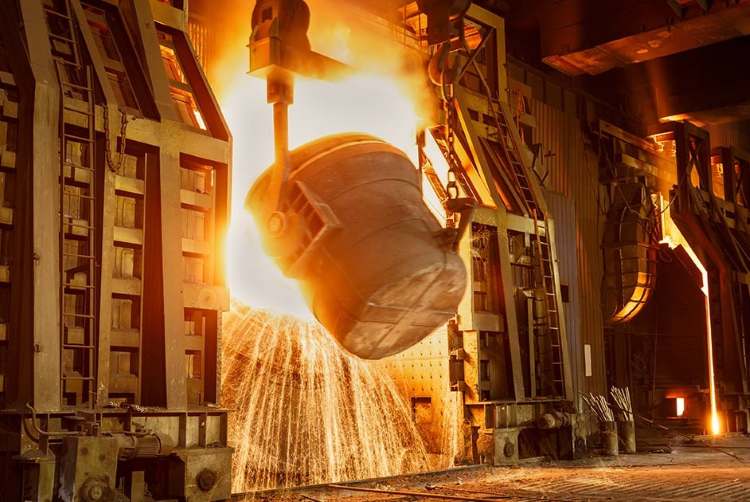

This brings the discussion to specialty steel. Indian steel industry’s production of high-grade and value-added steel remains below its potential. The government recognised this gap when it introduced the production-linked incentive scheme for specialty steel. The first round received a weaker response than expected, after which the scheme was revised and broadened. But capacity in specialty steel will not appear overnight. There is a gestation period. The sector must treat the next three years as a window to move up the product ladder.
The urgency is greater because the world steel trade is turning more protectionist. Steel is now treated as a strategic commodity by major economies. The United States used tariffs on steel during Donald Trump’s first term and has continued to rely on trade measures. The European Union, India’s major steel export market, has tightened its safeguard regime. The European Parliament has backed a new system that would cut tariff-free steel import quotas to 18.3 million tonnes annually, a 47% reduction from 2024 levels, and impose a 50% duty on imports above the quota.
This leaves India with a hard question. If its largest export markets become more restrictive, where will future steel exports go? A domestic demand boom can hide this question for some time. It cannot make it disappear.
READ I India’s steel demand growth faces capacity and cost risks
Green transition needs technology, finance, realism
The green transition adds another layer of difficulty. Steel is a hard-to-abate sector. India’s steel emission intensity is estimated at around 2.54 tonnes of carbon dioxide per tonne of crude steel, higher than the global benchmark of about 1.91 tonnes. This gives Europe and others a convenient reason to impose carbon-linked trade barriers such as the Carbon Border Adjustment Mechanism. The stated argument is climate protection. The practical effect is also trade protection.
India cannot ignore decarbonisation. But it must avoid a reckless transition that strands young assets. A large part of Indian steel industry’s capacity is still being built. The sensible path is phased: energy efficiency, better process control, higher scrap use where possible, greater use of renewable power, carbon capture pilots, and eventually green hydrogen-based steelmaking.
The Ministry of Steel’s green steel roadmap has already recognised this layered approach. It identifies immediate options such as energy efficiency and process improvement, while also looking at future technologies including green hydrogen and carbon capture. The government has also supported pilot projects under the National Green Hydrogen Mission, including projects for steel.
Green hydrogen could become for India what solar power became over the last 15 years. The economics are not yet settled. But if India can scale production and bring down costs, it could become one of the world’s competitive producers of green hydrogen. That would change the steel equation as well.
Scrap is another route to lower emissions, but India faces a structural constraint. A country with historically low steel consumption cannot suddenly generate abundant domestic scrap. It must import scrap, especially from the United States and Europe. Yet Europe’s waste shipment rules and export restrictions on ferrous scrap constrain the ability of developing countries to green their steel sectors. This is the contradiction in the West’s climate diplomacy. It asks India to decarbonise, but restricts access to some of the inputs needed for decarbonisation.
The same contradiction is visible in finance and technology. Developed countries made promises under the Paris Agreement on climate finance and technology transfer. Their record has been poor. India’s steel industry should therefore proceed on the assumption that it will have to do much of the heavy lifting itself.
That means investment in research and development. Here the sector’s record is weak. India cannot be the world’s second-largest steel producer and not have a first-rate steel technology institution. Other countries have built strong applied research ecosystems around steel. India must do the same. Industry, government and research institutions should jointly create a serious platform for process innovation, specialty steel, green steel, artificial intelligence in steelmaking, predictive maintenance, furnace efficiency, and raw material optimisation.
Funding is not the main obstacle. The Anusandhan National Research Foundation has been created to support research across sectors. Steel companies should actively use such platforms. The larger firms, in particular, must stop treating R&D as an afterthought.
READ I Green steel transition tests industry, governments
Raw material security is the next steel sector challenge
Raw material security is another unfinished agenda. India is relatively comfortable in iron ore, at least for now. It is not comfortable in coking coal, manganese, limestone, nickel and several other inputs. Coking coal is the most serious problem. India is heavily import-dependent, and the seaborne coking coal market is oligopolistic. Prices move sharply, often without a clear link to immediate demand conditions. A depreciating rupee worsens the problem by raising the landed cost of imported inputs.
Indian steel industry should look seriously at overseas mining assets. This will not be easy. Resource nationalism is rising. Countries with manganese, nickel or limestone increasingly want processing and value addition at home. Political risk is high in some geographies. But there are countries where risks can be managed, especially where India has bilateral investment arrangements. Large Indian steel companies must evaluate these opportunities with a long-term view.
Logistics is equally important. India’s logistics cost remains high by global standards. Steel and raw materials are bulky, heavy and transport-intensive. Rail connectivity, port handling, coastal shipping, slurry pipelines and dedicated mineral corridors must form part of the sector’s competitiveness strategy. Slurry pipelines already feature in the harmonised master list of infrastructure. Given steel’s role as an input into almost every infrastructure sector, there is a case for examining whether steel itself deserves more explicit infrastructure-policy treatment.
There is, however, one caution for industry. Protection cannot become a licence for profiteering. The safeguard duty helped steel producers when imports surged and margins were under stress. But steel is also a critical input for construction, engineering, automobiles, capital goods, infrastructure and housing. If producers use protection to raise prices excessively, the cost is passed through the economy. Inflation rises. Projects become costlier. Downstream manufacturers suffer.
India’s steel industry has earned policy support because it is strategic. It must now earn global respect because it is competitive. The domestic market will remain strong. But that should be the base, not the boundary, of ambition.
The next phase will test whether Indian steel industry can move from capacity creation to technological leadership. The industry has to invest in specialty steel, green processes, R&D, raw material security and logistics. Government has to support the transition without shielding inefficiency. Together, they must prepare for a world where steel will be protected, politicised and carbon-tested.
India has built the scale. It must now build the edge.