


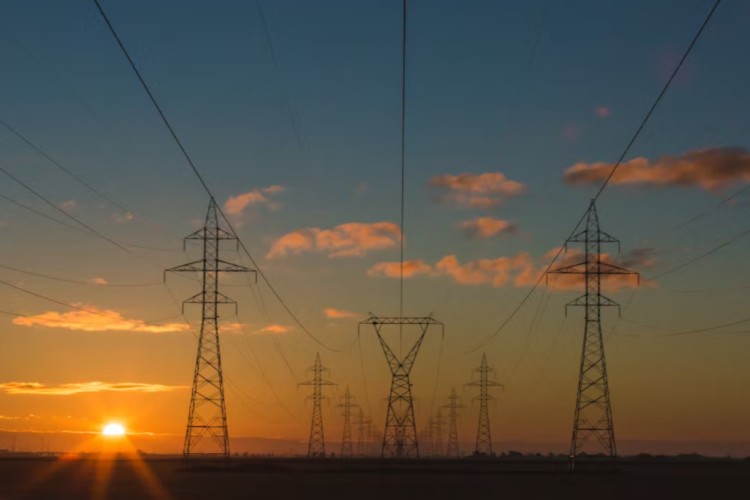
Temperatures are rising across India and the power sector is again under stress. The test is no longer theoretical. A prolonged summer, the risk of deficient rainfall and rising cooling demand are forcing a harder question- can distribution companies handle sharper demand spikes and renewable intermittency at the same time?
India’s peak power demand crossed 270 GW for the first time on May 21, 2026, touching 270.82 GW in the afternoon, according to the power ministry. That was the fourth consecutive day of a new peak. The surge came barely a year after India recorded a peak of about 243 GW in June 2025. The rise is sharp even by India’s recent standards of electricity consumption growth. Extreme heat across Delhi, Rajasthan, Punjab, Haryana, Uttar Pradesh and other regions has pushed cooling demand to record levels.
READ | Heatwaves and floods expose India’s urban policy gaps
Cooling demand reshapes India power demand
There is a clear shift in how India consumes electricity. For decades, demand was shaped mainly by industrial cycles and agricultural pumping. Residential cooling is now becoming a decisive factor. Air-conditioner use is expanding among urban and lower middle-income households. Fans, coolers and refrigerators also place heavy load on the grid during heatwaves.
India’s AC penetration is still low compared with richer economies. That is precisely why the pressure will rise. The International Energy Agency has projected a large increase in room air-conditioners in India over the next two decades. Rising incomes and rising temperatures will reinforce each other. India is entering a cooling economy, and the grid is not yet built for it.
The challenge is not annual electricity generation alone. It is the ability to supply large quantities during a few afternoon and evening hours when heat, household consumption and commercial demand converge.
This year’s risk is amplified by forecasts of El Niño conditions developing during the southwest monsoon season. IMD’s extended forecast has pointed to above-normal temperatures in parts of northwest, west and central India, with heatwave conditions likely over several regions. If rainfall disappoints, electricity demand will stay elevated through June and July, extending the summer peak.
READ | Heatwaves and ageing: India’s silent mortality burden
Heatwaves expose DISCOM stress
The concern is no longer only rising demand. It is whether the power ecosystem can absorb climate stress. Thermal plants still account for most of India’s electricity generation and need water for cooling. Reservoir levels affect hydropower generation as well as irrigation.
Heat stress and water scarcity are beginning to overlap. Deficient rainfall can reduce hydropower output and increase agricultural electricity use. Farmers rely heavily on electricity-powered groundwater pumping during dry spells. If the monsoon weakens, agricultural demand can remain high deep into the kharif season. That would add to the financial strain on state DISCOMs.
The government has avoided major nationwide blackouts in recent years despite repeated demand records. Grid coordination between generators, transmission companies and distribution utilities has improved. Renewable energy has also helped. Recent demand records were met partly because solar generation was available during afternoon hours. On May 21, solar accounted for a sizeable part of the supply mix during the daytime peak.
The harder problem begins after sunset. Cooling demand remains high, but solar output falls. This creates a steep evening ramp that thermal plants struggle to match efficiently. Without adequate storage, flexible generation and better local networks, balancing the grid will become harder.
The missing instrument is demand management. India cannot build its way out of every summer peak. Smart meters, time-of-day tariffs, appliance efficiency rules, commercial demand response and enforceable cooling standards must become part of power planning. The evening ramp after sunset is not only a generation problem; it is a pricing, storage and distribution problem. Unless DISCOMs are rewarded for reducing peak load and investing in local networks, record national supply will continue to coexist with neighbourhood blackouts.
READ | Heatwaves may force firms adopt temperature‑linked P&Ls
Coal remains India’s balancing fuel
Coal remains the default balancing fuel despite India’s renewable ambitions. India has expanded solar and wind capacity, but coal still supplies the bulk of electricity. Pumped hydro projects are moving slowly. Gas-based plants continue to run at low utilisation because imported liquefied natural gas is costly.
This coal dependence carries risk. India has faced coal stock stress in previous summers, forcing the government to push imported coal blending and higher domestic output. Stocks are better this year, but prolonged heat can strain supplies quickly. Peak demand leaves little room for mining bottlenecks, transport disruptions or sudden plant outages.
The stronger lesson is not that coal can be abandoned quickly. It cannot. The lesson is that coal cannot remain the only flexibility tool. India needs storage procurement, faster pumped hydro execution, ancillary services, flexible coal operation and limited peaking capacity where economics permit. These are not climate luxuries. They are reliability requirements.
Local outages reveal the real power-sector gap
Electricity is now a basic climate service. A power disruption during extreme heat can turn quickly into a public health crisis. Heat stress affects labour productivity, hospitals, food storage, water supply and household safety.
This was visible in the recent Gurgaon outage, where a fault at a Sector 72 substation plunged several areas into darkness during severe heat. Rapid Metro services were disrupted, commuters were stranded, and residents faced sweltering conditions without electricity. Such failures show that India’s challenge is not confined to national generation capacity. The weak link is often local: feeders, transformers, substations and overloaded distribution networks. The draft’s evidence points to precisely this vulnerability.
For poorer households, unreliable supply during heatwaves is more than inconvenience. It affects sleep, work, health and food security. Those who cannot afford inverters, backup systems or efficient appliances bear the heaviest cost. Climate adaptation policy must therefore treat reliable electricity as essential infrastructure.
India is among the countries most exposed to climate extremes. What it is witnessing is no longer a series of isolated weather events. It is a pattern. The power-sector response must move beyond capacity addition targets. Storage, transmission, DISCOM reform, cooling efficiency and demand management now belong at the centre of India’s energy transition.