


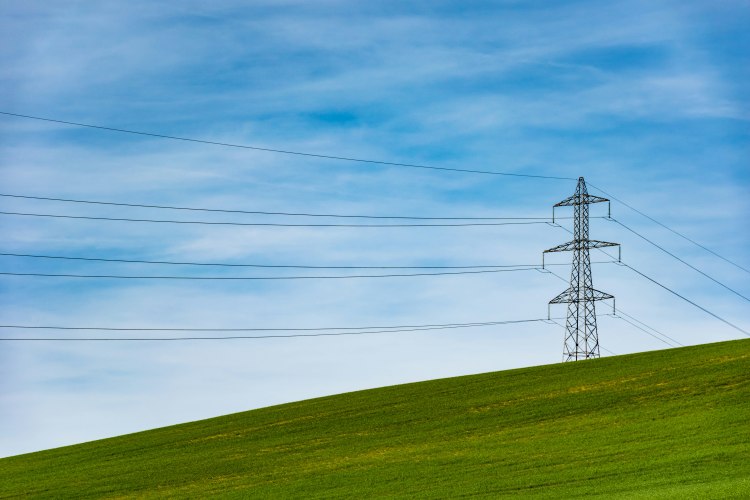
India must focus on building a smart grid: The last decade saw climate-tech investment in India and elsewhere following the money going into solar parks, wind farms, batteries and electric vehicles. The priority was to build more clean-energy capacity. But adding capacity creates another problem when the system is not equipped to absorb and distribute it efficiently. Solar power arrives mainly during the day, demand can rise sharply after sunset, and distribution companies have to keep the network stable as more variable sources and new loads are connected to it.
India is now grappling with this problem as renewable capacity grows and electricity consumption changes. Air-conditioners are pushing up evening demand, factories are replacing fossil-fuel with electricity, and electric vehicles and data centres are adding loads in different parts of the network. The challenge for utilities is becoming more granular: they need to know where demand is rising, where equipment is under pressure and when renewable power will be available. That is creating a market for technologies that can monitor the distribution network, forecast demand and coordinate the growing number of devices connected to it.
That changes the climate-tech opportunity. The distribution grid, long treated as relatively unglamorous infrastructure, is becoming a technology platform in its own right.
READ | India’s clean energy transition needs a stronger grid
The grid is becoming a two-way system
Older electricity networks were designed around a relatively simple model: large power plants generated electricity, transmission networks carried it over long distances and distribution companies delivered it to consumers. The rise of rooftop solar, batteries and electric vehicles is changing that arrangement. Electricity can now flow in both directions, while demand and supply can vary much more sharply across the day.
The problem is not simply physical. Utilities need better information about what is happening on feeders, transformers and individual connections, as well as tools to forecast demand and manage distributed resources.
Artificial intelligence is beginning to fill part of that gap. AI systems can combine weather information, smart-meter data and consumption patterns to improve demand forecasts and identify potential stress on distribution equipment. Itron’s 2025 collaboration with NVIDIA, for example, is aimed at bringing AI computing to the grid edge, including demand forecasting, grid optimisation and real-time processing. NVIDIA has also worked with Utilidata on smart-grid chips designed to run applications inside smart meters.
The commercial case is easier to see in distribution software than in grand claims about autonomous grids. Bengaluru-based Kalkitech and Visakhapatnam-based Fluentgrid, for example, provide software used by utilities for functions including meter data management, energy accounting, loss detection and distribution-network monitoring. Fluentgrid says its systems can identify technical and commercial losses and flag potential theft or unmetered consumption.
These technologies do not eliminate the need for physical investment. They make existing infrastructure more observable and potentially more responsive.
READ | Rooftop solar programme needs a stronger grid
Blockchain has a narrower role
Blockchain has attracted attention for a different reason: the possibility of recording transactions among many participants without relying entirely on a single central ledger.
The most concrete applications so far have been pilots in peer-to-peer electricity trading. In 2021, Tata Power Delhi Distribution Ltd, Power Ledger and the India Smart Grid Forum conducted a Delhi pilot involving more than 2 MW of rooftop solar capacity. Participants could trade surplus electricity through a platform that used blockchain to record transactions.
The significance of such experiments is less that blockchain will replace utilities than that digital platforms could eventually allow households and businesses with distributed energy resources to participate more directly in electricity markets. The utility would still have to maintain the physical network, verify metering and ensure that transactions comply with grid and market rules.
India is now moving beyond isolated demonstrations. The India Energy Stack, being developed as digital public infrastructure for the power sector, is being tested for peer-to-peer energy trading. REC Limited has invited technology providers to participate in an interstate P2P pilot involving standardised data exchange, digital credentials, auditability and integration with utility systems. Tata Power-DDL, BSES Rajdhani Power and Uttar Pradesh’s Paschimanchal Vidyut Vitran Nigam have been identified for the pilot.
Delhi already has a regulatory framework for such transactions. The Delhi Electricity Regulatory Commission issued its Peer to Peer Energy Transaction Guidelines in June 2024, setting out provisions for participants, metering, transactions and the use of blockchain or other technologies to record transaction data.
That is a more consequential development than another blockchain demonstration. It suggests that the question is shifting from whether the technology works in a controlled pilot to whether regulators can design rules under which distributed electricity trading can operate at scale.
READ | India’s green energy transition runs into grid constraints
The commercial opportunity is at the grid edge
The same shift is visible outside India. Siemens began working with LO3 Energy on the Brooklyn Microgrid project in 2015 and later invested in the company. The project explored local energy markets in which distributed generators and consumers could transact within a microgrid.
The technology has evolved since those early experiments. AI, advanced metering, distributed energy-resource management systems and automated controls are now converging around the same problem: how to manage an electricity system with many more sources of generation and much more variable demand.
The investment opportunity, therefore, may be broader than any one technology. Companies that can help utilities forecast demand, identify network constraints, manage batteries and EV charging, integrate rooftop solar or automate transactions could capture value as grids become more distributed.
The physical build-out remains essential. India needs more transmission, distribution capacity, storage and generation to meet rising demand. But the economics of that investment will increasingly depend on how efficiently the network can be operated.
Regulation will determine how far the market goes
The biggest uncertainty is no longer whether distributed energy technologies can be demonstrated. It is whether electricity markets and regulation can accommodate them.
Peer-to-peer trading is a useful example. A household may be technically capable of selling surplus solar electricity to another consumer, but the transaction still has to fit within rules governing distribution licences, metering, settlement, network charges and consumer protection. India’s existing regulatory structure was designed around licensed utilities and centrally organised electricity markets.
The Delhi P2P guidelines and the India Energy Stack pilot show that this framework is beginning to adapt. But pilots remain pilots. Their eventual significance will depend on whether regulators allow such arrangements to expand while protecting grid reliability and the financial position of distribution companies.
That is why the next phase of climate-tech may be less visible than the first. Solar panels, wind turbines and electric vehicles are tangible assets. The software that forecasts a transformer overload, manages a battery or matches surplus rooftop generation with local demand is harder to see.
Yet as renewable generation and electricity demand both rise, the ability to coordinate those assets will become increasingly valuable. The energy transition is moving from the problem of building enough clean power to the harder task of making a much more complex electricity system work.
Pankhuri Bansal is AI & Blockchain Expert, United Nations and CEO, Blockom Consulting. Gayatri Pandya is a thought leader and influencer, and member, Forbes Business Council.