


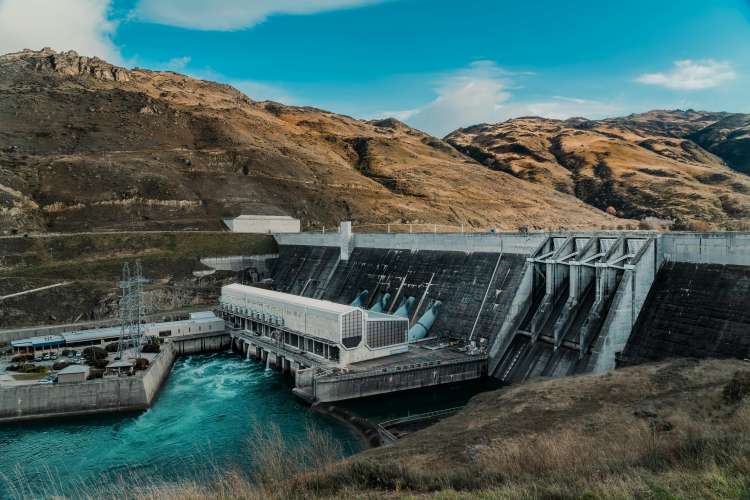
The Union Cabinet’s approval of the Small Hydro Power Development Scheme for FY 2026-27 to FY 2030-31 is a sensible intervention. With an outlay of ₹2,584.6 crore, including ₹2,532 crore for project implementation, the scheme aims to add 1,500 MW of capacity through projects of 1-25 MW. That focus matters. Small hydro power remains one of India’s most underused renewable resources, especially in hilly and North-Eastern states where the resource is concentrated but conventional grid expansion is costly and slow.
Small hydro power has long occupied an odd place in India’s renewable energy strategy. It lacks the scale and headline appeal of solar parks or the policy momentum of battery storage. Yet it offers something both solar and wind cannot always provide: firm power with relatively high plant load factors, long asset life, and lower intermittency. It is also well suited to remote regions where local generation matters more than national capacity numbers.
India’s assessed small hydro power potential is 21,133 MW across 7,133 sites. Only a fraction of that has been tapped. Small hydro accounts for just 2.6% of India’s renewable energy installed capacity, excluding large hydro. That tells its own story. The problem is not the absence of resource. It is the inability to convert resource into viable projects.
READ I India’s energy policy stuck between renewables and fossil fuels
State-wise hydro gaps show the real constraint
The geography of small hydro power is uneven, and so is its development. The Himalayan states and the Western Ghats dominate the resource map because they have steep gradients, perennial rivers, and a longer history of hydro development. Even there, capacity addition has lagged far behind potential. Karnataka has used only 34% of its assessed small hydro potential, Himachal Pradesh 29%, Uttarakhand 14%, and Arunachal Pradesh just 7%.

These are not trivial gaps. They reflect the familiar obstacles of Indian infrastructure: difficult terrain, forest and land clearances, weak evacuation systems, long construction cycles, and high civil works costs. In remote regions, these problems compound each other. A project may be technically sound and still fail the test of bankability.
Some states with fewer topographical and climatic constraints have done better. Telangana has tapped 89% of its assessed potential, Haryana 68%, Gujarat 56%, while Odisha and Maharashtra have reached 49%. The contrast is instructive. Small hydro does not fail because the technology is weak. It stalls because execution capacity is uneven.
READ I India’s solar module manufacturing boom meets US tariff wall
States hold the key to small hydro power
That is why the central scheme, while welcome, cannot by itself unlock the sector. Small hydro is site-specific in a way that solar and wind are not. It cannot be scaled through a generic national template. Water is a state subject. Clearances, local infrastructure, land access, and project coordination all depend on state governments. The economic gains from such projects, roads, local jobs, ancillary services, and electricity access, also accrue largely within the state. Yet the same states often remain the principal bottleneck.

The implication is clear. India does not need a uniform national push as much as it needs competent state-level execution. The Tamil Nadu government’s recent policy allowing private developers to generate power for self-consumption or third-party sale points to a more pragmatic route. Decentralised flexibility, not centralised ambition, is what this sector requires.
READ I Solar-powered buildings: The next big shift in climate resilience
Financing small hydro power projects
That also explains why public finance will matter. In remote and high-risk geographies, private developers will not step in merely because the Centre has announced a scheme. The risk-return equation is often unattractive. Viability Gap Funding, concessional debt, and state-backed support for transmission and evacuation infrastructure will be necessary if private capital is to come in at all.
This is where policy usually turns vague. It should not. If the government wants 1,500 MW of credible addition, it must identify which risks the public sector will absorb and which risks the market can bear. Without that division, the scheme risks producing announcements rather than assets.
Climate risks could reshape hydro economics
There is another complication. Climate change is altering the basic assumptions on which hydro projects are designed. Erratic rainfall, glacial melt, higher sedimentation, flashier river flows, and more frequent landslides are raising both engineering and financing risks, particularly in the Himalayan belt. Small hydro power may be cleaner than large hydro in its footprint, but it is not insulated from hydrological instability.
That makes climate resilience central to project design, not an afterthought. Seasonal water variability already affects generation consistency. In future, the challenge will be sharper. Projects will need more conservative design standards, stronger safety margins, and a more realistic assessment of operating risks.
Renewable models deserve policy support
This is also why hybridisation deserves more attention. Pairing small hydro power with solar or storage can improve supply stability and reduce dependence on seasonal water flows. India has moved too slowly on such models, though the logic is strong. Where hydro assets can provide balancing support to variable renewables, the system value rises well beyond the installed capacity number.
Examples from larger hydro-storage settings show the direction. The question is whether policy can adapt that logic to smaller, decentralised contexts. If it can, small hydro may yet find a viable role in India’s renewable mix, not as a mass solution, but as a strategic one.
The Cabinet’s new scheme is therefore best seen as an enabling step, not a breakthrough. India’s small hydro future will depend less on budgetary announcements from New Delhi than on whether states can clear projects faster, build evacuation links, share risks intelligently, and plan for a harsher climate. The resource exists. What is missing is administrative capacity where it matters most.
Chetana Chaudhuri is a Fellow, and Ujala Kumari a consultant at NCAER, New Delhi.