


The Centre’s decision to release ₹1.09 lakh crore in tax devolution to states on November 5, five days ahead of schedule, has provided welcome fiscal relief. It followed an additional instalment of the same amount on October 31, intended to help states meet capital expenditure and welfare commitments. In the first six months of 2026-27, states received ₹6.99 lakh crore against the annual budget estimate of ₹15.26 lakh crore. Yet the timely release of funds does little to address a persistent weakness in India’s fiscal federalism: states bear substantial responsibility for public investment and essential services but have limited control over the revenues that finance them.
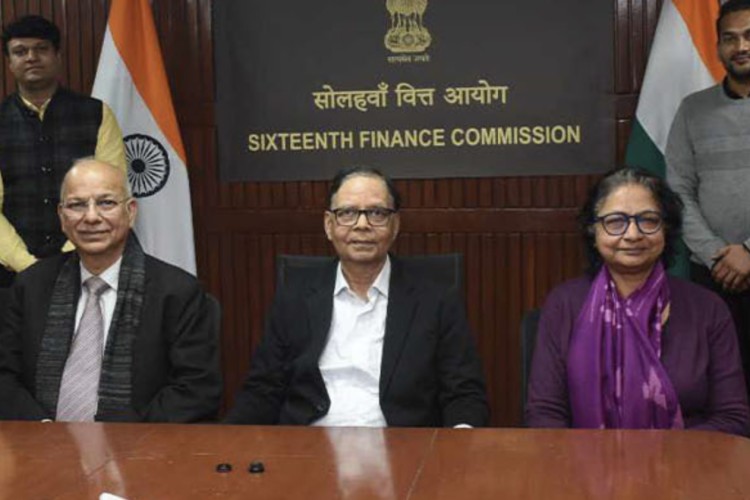
The 16th Finance Commission, whose recommendations govern the distribution of central taxes from 2026-27 to 2030-31, had an opportunity to correct part of this imbalance. Its report, tabled in Parliament in February, retained the existing framework with some changes. The more difficult questions concerning tax autonomy, discretionary transfers and the growing use of cesses and surcharges remain unresolved.
READ | Finance Commission devolution tests fiscal federalism
States finance much of India’s expenditure on healthcare, education, roads, irrigation, drinking water, sanitation and urban infrastructure. They also bear the fiscal and political costs of welfare commitments, including programmes designed by the Centre. Their capacity to sustain these services depends on the predictability of transfers and the freedom to allocate resources according to local priorities.
Why states sought a larger share of central taxes
Eighteen of the 28 states asked the Commission to increase their share of the divisible pool of central taxes from 41% to 50%. Their case rested on the division of responsibilities between the two tiers of government. The Centre commands the larger and more buoyant tax instruments, while states carry substantial expenditure obligations.
The second demand concerned the divisible pool itself. The constitutional sharing arrangement excludes cesses and surcharges, whose proceeds remain entirely with the Centre. As these levies have grown, the proportion of gross central tax revenue available for sharing has declined.
According to the Commission’s calculations, the divisible pool accounted for 89.2% of gross central tax revenue during the 13th Finance Commission period. It fell to 82.1% during the 14th Commission period and averaged 78.3% during the first four years of the 15th Commission period. States consequently receive 41% of a smaller proportion of total central tax collections.
The distinction is substantial. At a divisible-pool ratio of 78.3%, a 41% devolution share translates into roughly 32% of gross central tax revenue, before accounting for other transfers. The percentage written into the sharing formula therefore gives an incomplete picture of the resources available to states.
States also sought fewer restrictions on central transfers. Centrally sponsored schemes often prescribe spending priorities, implementation conditions and state contributions. Although they serve national policy objectives, they can limit the ability of state governments to respond to different economic and social circumstances.
READ | 16th Finance Commission: New devolution formula, tighter grants
The introduction of GST in 2017 added another constraint. States surrendered the independent power to change rates on several major indirect taxes. Decisions on GST rates now pass through the GST Council, where the Centre and states share decision-making authority. This has improved tax coordination but narrowed the scope for individual states to adjust tax rates in response to local requirements.
The withdrawal of GST compensation after June 2022 sharpened these concerns. During the five-year transition, states were protected by a guaranteed 14% annual growth in revenue from taxes subsumed under GST. The expiry of that guarantee left them more exposed to variations in collections.
The 16th Finance Commission’s limited response
The Commission retained states’ share of the divisible pool at 41%, rejecting the demand for 50%. The Union government accepted the recommendation in the 2026-27 Budget.
The Commission offered a substantial counterargument. Between 2015-16 and 2023-24, states accounted for an average of 57.5% of the country’s combined central and state tax revenues. Once tax devolution and other transfers were included, their share of total non-debt revenue resources exceeded two-thirds during the previous Commission’s award period. Increasing their share of the divisible pool could constrain the Centre’s ability to meet national obligations.
This reasoning deserves consideration. The Centre must finance defence, national infrastructure, interest payments and other commitments. A larger allocation to states without corresponding expenditure adjustments would add to its fiscal pressures.
But aggregate revenue shares do not settle the question of fiscal autonomy. A rupee raised through a state’s own taxes is not equivalent to a rupee transferred under a scheme that dictates how it must be spent. Nor does the combined share of all states reveal the fiscal position of individual governments, particularly those with weaker revenue bases.
The Commission also declined to recommend bringing cesses and surcharges into the divisible pool or imposing a constitutional ceiling on them. It cited the Centre’s need for flexibility, including during emergencies. That concern is valid, but it leaves states exposed to future changes in the composition of central taxation.
There were more significant adjustments to the formula for distributing taxes among states. Income distance, which favours states with lower per capita incomes, continues to carry the highest weight at 42.5%. Population accounts for 17.5%, while area, forest cover, demographic performance and contribution to GDP each carry 10%.
The introduction of GDP contribution is intended to recognise states’ contribution to national output. It replaces the earlier tax and fiscal efforts criterion, while the weight assigned to income distance has been reduced from 45%.
The change attempts to balance equity with economic contribution. Poorer states need greater fiscal support to improve infrastructure and public services. More prosperous states, meanwhile, seek recognition for their contribution to the national tax base. The revised formula acknowledges both concerns, although the long-term distributional effects will depend on how state economies perform.
READ | States vs Centre: Tax devolution dilemma continues
Grants and conditional loans constrain state budgets
The Commission recommended ₹9.47 lakh crore in grants over five years, including ₹7.91 lakh crore for rural and urban local bodies and ₹1.56 lakh crore for disaster management. The 2026-27 Union Budget provides ₹1.4 lakh crore in Finance Commission grants.
At the same time, the Commission discontinued revenue deficit grants and the sector-specific and state-specific grants recommended by its predecessor. The change removes an avenue of support for governments facing persistent gaps between revenue receipts and expenditure. Local body grants also carry eligibility and spending conditions.
States can continue to draw on the Special Assistance to States for Capital Investment scheme, which provides 50-year interest-free loans. These loans have helped sustain infrastructure spending, particularly when states face tight borrowing limits. Yet they remain repayable liabilities, and access to parts of the programme is linked to specified reforms and conditions.
The constraints on state budgets are considerable. PRS Legislative Research estimates that salaries, pensions and interest payments absorbed 53% of states’ revenue receipts in 2023-24. Subsidies accounted for another 9%. These commitments leave limited fiscal room for new investment, maintenance of public assets and improvements in services.
The Reserve Bank of India reported that the consolidated fiscal deficit of states rose from 2.9% of GDP in 2023-24 to 3.3% in 2024-25. Slower revenue growth and higher capital expenditure contributed to the increase. The figures underline the difficulty of expanding investment while keeping deficits and debt within manageable limits.
There is a policy inconsistency in encouraging states to undertake long-term investment while making an increasing part of their support dependent on conditional financing. Infrastructure requires predictable funding over several years. Annual approvals and changing scheme requirements complicate project planning and can weaken the accountability of elected state governments.
Fiscal autonomy requires reform on both sides
Greater transparency over the divisible pool should be the starting point. The Union government should publish clearer projections of revenue from cesses and surcharges, explain significant changes in their use and assess their implications for tax devolution. A more predictable sharing arrangement would help states prepare credible medium-term budgets.
Centrally sponsored schemes also need rationalisation. National standards in healthcare, education and infrastructure remain important, but states should have more discretion over implementation. A larger untied component, accompanied by measurable outcomes and independent evaluation, would preserve accountability without imposing uniform expenditure choices.
The responsibility for reform also lies with state governments. Weak property tax collections, inadequate user charges, inefficient public enterprises and poorly targeted subsidies constrain their finances. Better tax administration and more effective collection of existing taxes could generate resources without increasing dependence on the Centre.
Fiscal autonomy must therefore be matched by stronger revenue mobilisation and expenditure discipline. States seeking greater control over public funds should also improve budget transparency, reduce off-budget liabilities and ensure that borrowing finances productive investment rather than recurring expenditure.
The 16th Finance Commission has preserved the existing balance of tax sharing while modifying the distribution among states. That offers continuity, but the unresolved issues are increasingly consequential. States need sufficient predictable and discretionary revenue to finance development, while the Centre needs the resources to discharge its national responsibilities.
The next stage of fiscal reform should give states greater command over their finances, alongside clearer accountability for how those resources are raised and spent.