


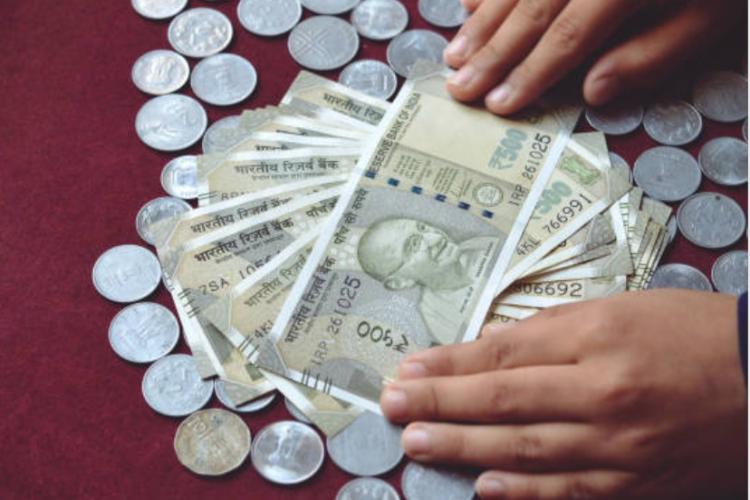
The Indian rupee is caught between geopolitics and the Reserve Bank of India. On most days, the currency seems to respond more to West Asia than to domestic conditions. The recently announced ceasefire in the Middle East pushed oil prices higher and nudged the rupee lower. On Thursday, the rupee slipped to 92.65 against the dollar, down 0.1%, as unease spread across emerging markets. The pressure is not coming mainly from the domestic economy.
The immediate trigger is familiar. Rising crude prices have long been a pressure point for India’s external balance. As a large net oil importer, India remains vulnerable to a higher energy bill. When oil rises, the import bill swells, the current account deficit widens, and demand for dollars increases. That part is routine. What is different this time is the persistence of geopolitical risk. Israel’s strikes in Lebanon and the fragility of US-Iran engagement have kept supply disruption risk alive.
READ | RBI monetary policy and the rupee’s warning signals
Financial markets have reacted accordingly. Indian equities fell about 1%. The 10-year bond yield rose by nearly 6 basis points. The broader Asian risk complex weakened, with the MSCI gauge of Asian equities slipping around 1%. The rupee’s weakness is part of a regional pattern, not an isolated event.
There is another point the market commentary often misses. A weaker rupee is not always a sign of fresh macroeconomic damage; sometimes it is also a correction from earlier overvaluation. RBI-linked real effective exchange rate data show the rupee’s REER was 103.4 in February 2026, down from 104.2 in January but still above 100. That suggests some of the recent movement is not merely panic over oil and war. It may also reflect a partial realignment after a period in which the currency had become less supportive of export competitiveness.
RBI intervention changes rupee market behaviour
Yet the rupee remains one of Asia’s better performers. Over the past fortnight, it has recovered sharply, helped by RBI intervention. By tightening rules on banks’ open positions and curbing participation in offshore non-deliverable forwards, the central bank has disrupted the arbitrage that allowed traders to profit from price gaps between onshore and offshore markets.
The result is visible. The rupee has gained roughly 2.5% since late March, outperforming peers such as the Thai baht and the South Korean won. It rose 0.2% to 92.4625 per dollar on Friday and is heading for a second straight week of gains. Traders have been squaring off speculative positions ahead of the RBI’s compliance deadline. The central bank has, for now, restored discipline to the market.
READ | West Asia war puts the rupee under fresh pressure
That also raises a larger question about exchange-rate management in an integrated financial system. India’s approach has usually been pragmatic. The RBI allows the rupee to adjust gradually and steps in to prevent disorderly moves. The latest measures suggest a more assertive stance, with stability taking precedence over market completeness.
That matters for another reason. Exchange-rate management is not only about market order; it is also about inflation control. The RBI kept rates unchanged on April 8 and warned that higher oil prices and shortages of key inputs such as gas could weaken growth while pushing inflation risks higher. It projected average inflation at 4.6% for 2026-27. In that setting, intervention serves a second purpose: it limits the pass-through from currency weakness to fuel, transport and other traded-input costs.
Capital outflows keep the rupee vulnerable
The broader macro backdrop remains uncomfortable. Capital flows, which have long cushioned the rupee, are turning volatile. Persistent foreign selling, driven by both global and domestic concerns, is becoming harder to ignore. Global funds have pulled nearly $3 billion from Indian equities so far this month, extending the selling streak to 24 trading sessions.
Higher US yields and geopolitical uncertainty have made emerging market assets less attractive. Concerns over slower earnings growth and stretched valuations in Indian equities have added to the discomfort. The result is a steady outflow of capital and a persistent depreciation bias for the rupee.
On the trade side, the picture is no easier. Services exports and remittances continue to offer support, but the merchandise trade deficit remains exposed to commodity prices. A sustained period of high oil prices would push the current account deficit beyond comfort levels. If export demand also stays weak, the rupee will come under renewed pressure, testing the RBI’s capacity to smooth volatility.
READ | Rupee depreciation is India’s oil warning
The quality of India’s external buffers also needs closer attention. The current account deficit narrowed to 1% of GDP in the first three quarters of FY26 because inward remittances and a larger services trade surplus more than offset a wider merchandise trade gap. But the financing side is less reassuring. The World Bank says net FDI inflows in April-January FY26 fell to about $1.7 billion from $2.2 billion a year earlier, while net FPI outflows reached $6.2 billion. That distinction matters. Remittances and services earnings are far steadier than portfolio capital, which means the rupee can remain vulnerable even when headline external balances look manageable.
India’s macro fundamentals offer only limited comfort
The one source of resilience is India’s macroeconomic position. Growth is expected to stay around 6.5-7%. Inflation is broadly under control. Foreign exchange reserves provide a substantial buffer. These are the factors that separate India from more fragile emerging markets and give the RBI room to respond without resorting to extreme measures.
The rupee’s path is therefore unlikely to be linear or dramatic. It will probably move within a broad range, reacting to external shocks more than domestic impulses in the near term. Much depends on West Asia. A durable ceasefire that stabilises oil prices could ease pressure on the currency. A fresh escalation would do the opposite.
Global monetary policy will matter just as much. If US interest rates stay high for longer, the dollar will remain firm and limit the upside for emerging market currencies. Any sign of easing could reverse some of the capital outflows. For now, the rupee’s direction depends as much on Washington and West Asia as on Mint Street.