


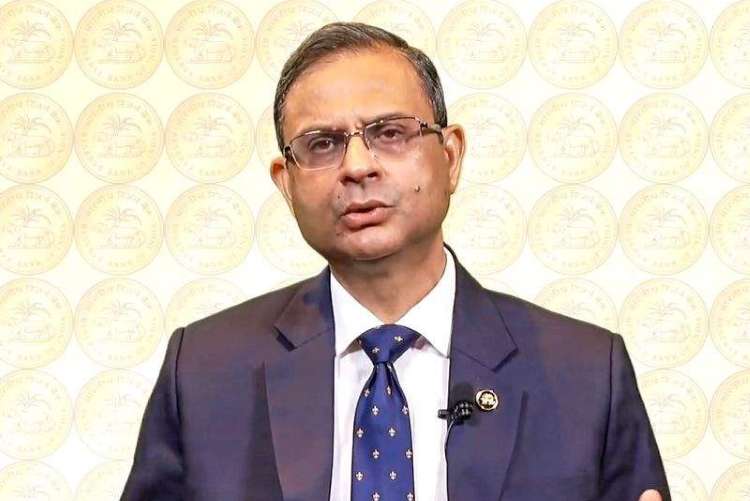
The latest monetary policy statement comes at a difficult moment for the global economy. The Monetary Policy Committee has held the repo rate at 5.25% and retained its neutral stance, broadly in line with market expectations. But the more important signal lies in the change of tone. The RBI appears less confident that the external environment will remain manageable.
In 2025, the RBI cut rates by a cumulative 125 basis points. The pause across subsequent meetings suggested that it believed enough had been done to support growth without endangering inflation stability. That calculation is now under strain. The aftershocks of the West Asia conflict have unsettled commodity markets, exchange rates and global financial conditions.
READ I Small savings rates put government in a policy bind
What also matters now is transmission. The case for a rate pause rests partly on whether earlier easing is still passing through to lending rates, deposit rates and market borrowing costs. RBI’s own framework treats policy transmission as central to the effectiveness of rate action, and past RBI assessments have acknowledged that transmission can be uneven and incomplete. That makes the lagged effect of earlier cuts as important as the headline repo rate.
The MPC meeting came hours after the announcement of a two-week ceasefire in West Asia. Governor Sanjay Malhotra said the announcement had been taken into account. That matters because monetary policy works on expected trajectories, not just current data. India’s inflation and growth outlook is now more exposed to external shocks than it was a few months ago.
READ I Why the global corporate tax system needs a redesign
Inflation outlook and imported shocks
For FY27, the RBI expects headline inflation at 4.6% and core inflation at 4.4%. It has also published a formal core inflation forecast for the first time. That is a useful signal. Even with core inflation still contained, the RBI is watching for second-round effects from supply shocks, especially through energy prices.
The RBI expects CPI inflation to begin at 4% in Q1, rise to 4.4% in Q2, peak at 5.2% in Q3 and ease to 4.7% in Q4. This is a familiar policy dilemma. Inflation is not being driven by excess domestic demand. It is being pushed up by imported cost shocks. Monetary tightening cannot do much to fix that. But the RBI still has to keep inflation expectations anchored. Its present stance reflects that constraint. Barclays has noted that the MPC appears to view the current inflation rise as transitory and supply-driven, with no urgency for rate hikes.
The other variable is food. In India, food price volatility still has a disproportionate effect on headline inflation and inflation expectations, and RBI research has explicitly linked adverse monsoon conditions to spikes in food inflation. With the southwest monsoon normally setting in over Kerala around 1 June, the inflation outlook cannot be read through crude prices alone. A normal season would help. Any deficiency or poor distribution would complicate the picture quickly.
READ I Why the global corporate tax system needs a redesign
GDP growth risks and weaker momentum
The RBI has projected FY27 GDP growth at 6.9%, down from an estimated 7.6% in FY26. India may remain one of the fastest-growing major economies, but momentum is weakening. Higher commodity prices will squeeze household purchasing power and company margins. Financial market volatility will also tighten external financing conditions.
According to the April MPC report, real GDP growth is projected at 6.6% under the baseline assumption of a normal monsoon and no major exogenous or policy shocks. Under a higher-crude scenario, growth is projected at 6.7% for 2026-27 and 6.4% for 2027-28.
Rupee pressure and RBI response
The rupee has come under pressure as geopolitical tensions worsened. It depreciated by more than 4% in March, prompting the RBI to use regulatory measures to curb speculative positions. By tightening rules on banks’ net open positions and restricting some derivative exposures, the central bank tried to stabilise the currency without overt market intervention. The rupee later recovered some ground.
That is a defensible approach. The RBI has rightly reiterated its commitment to a market-determined exchange rate while reserving the right to contain excessive volatility.
Liquidity conditions also deserve more attention than the draft gives them. The RBI’s own monetary policy framework makes clear that policy is not only about setting the repo rate but also about modulating liquidity to anchor money-market rates. In practice, that means the effective stance can tighten or ease even when the repo rate does not move. In a phase like this, liquidity management may matter almost as much as rate action.
Banking system resilience, but not immunity
The domestic picture remains relatively reassuring. The banking system is resilient. Capital adequacy is strong, asset quality has improved and profitability remains healthy. Credit growth is still broad-based, suggesting earlier rate cuts are continuing to work through the economy.
That said, the RBI will have to watch for excesses in segments prone to overheating. If external shocks persist and domestic demand weakens, asset quality could again come under pressure.
The latest MPC statement is one of the more cautious, even mildly hawkish, policy signals in recent times. Yet it stopped short of pointing to an imminent rate hike. By neither committing to further easing nor moving pre-emptively to tighten, the RBI has preserved flexibility. It is waiting for greater clarity on global developments.
That is prudent. India’s macroeconomic management is entering a more difficult phase. The era of relatively benign global conditions is over. The trade-off between growth and inflation is becoming harder to manage. In such a setting, policy is less about optimisation than risk management.
For policymakers, this also means closer coordination between monetary, fiscal and regulatory instruments. The rate pause was no surprise. The policy statement mattered more for what it revealed: an economy navigating crosscurrents and a central bank operating with limited room for error.