


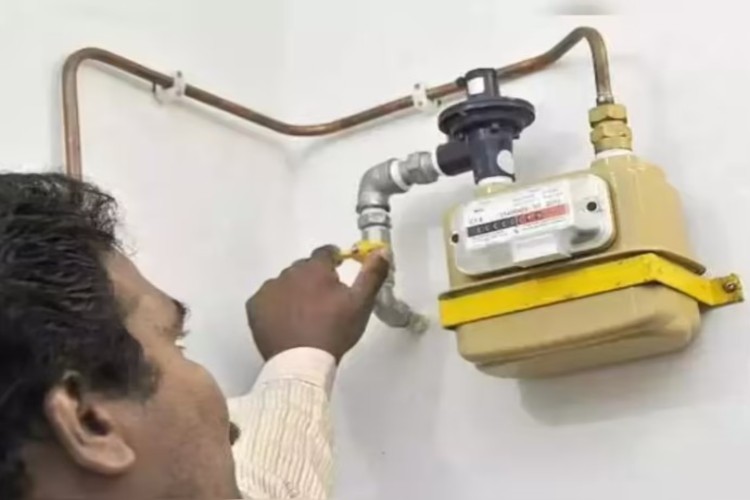
The unexpected fuel shortage driven by the Iran crisis has compelled the government to expedite PNG adoption in the country. While the first phase of the drive ended on 31st March, the government on Tuesday extended National Piped Natural Gas drive 2.0 by three months until June 30 to accelerate adoption. To nudge users into adoption, the government had also warned earlier that LPG supplies could be curtailed in areas where PNG is available.
The idea is to increase the share of gas to 15% in the country’s energy basket and extend natural gas pipeline connectivity to an additional 37 geographical areas (GAs) which are not connected to the national gas pipeline and 44 districts which are yet to join the PNG network. India added more than 310,000 new PNG connections in March alone across domestic and commercial users and a further 270,000 PNG connections have been issued.
READ | India gas supply: Why the Iran conflict may not choke urban kitchens
The global backdrop warrants attention. The West Asia conflict has disrupted supply chains and tightened the availability of LPG. India is heavily dependent on imports for its cooking gas needs and is now finding itself vulnerable due to these shocks.
PNG offers convenience, but only where networks exist
While the idea of increasing gas usage to energy mix is important, PMG connections are also more efficient for households as they do not need prior booking or checking whether the cylinder will last through the week. The convenience is a big draw for kitchens as well. Ramping up PNG connections hence offers savings and convenience. Unlike LPG cylinders which require upfront payment for a fixed quantity, PNG operates on a metered basis, much like electricity and the user pays for what they use. For households with limited cash flows, PNG connections work better.
There is also the matter of price stability. LPG prices are influenced by global crude trends and exchange rates and have been prone to volatility. PNG is not immune to global dynamics either but tends to offer relatively more stable pricing due to long-term supply contracts and regulated tariffs in city gas distribution networks. Households appreciate predictability.
The absence of cylinder logistics i.e booking, delivery, storage also removes a layer of friction from daily life. There is no anxiety about running out of gas mid-cooking and no need to keep a spare cylinder.
READ | India may offer cheaper natural gas to revive LNG trucks amid US pressure
There is also the case for safety. While LPG cylinders are generally safe when handled properly, they still carry the risk associated with storage and handling. PNG is supplied through pipelines with built-in safety mechanisms and lower operating pressures and reduces some of these risks. Leak detection systems and automatic shut-off features further add to the sense of security.
Considering these benefits, city gas distribution companies have stepped in with incentives to nudge adoption. Free gas, waived registration charges and relaxed security deposits are all part of a broader strategy to get more people on board. Indraprastha Gas Ltd and GAIL Gas Ltd are providing free gas worth around Rs 500 for domestic consumers. Mahanagar Gas Ltd has waived registration charges of about Rs 500 for domestic PNG consumers. Bharat Petroleum Corporation has also announced a waiver of security deposits for all commercial connections.
PNG expansion faces infrastructure and access limits
However, the expansion of PNG infrastructure will be capital-intensive and time-consuming. Laying pipelines across diverse terrains and coordinating with local authorities can slow down progress. For many smaller towns, connectivity is a distant promise and not really a quick option.
That matters because cooking fuel access in India still reflects a sharp urban-rural and rich-poor divide. PNG remains concentrated in cities and networked neighbourhoods, while poorer and rural households continue to depend on cylinder distribution. This includes beneficiaries of the Ujjwala scheme, which has provided more than 10 crore LPG connections to women from poor households. For these households, the central issue is not the convenience of piped supply but the affordability and regular availability of LPG refills. Any attempt to weaken LPG access before PNG coverage is genuinely widespread would therefore deepen an existing inequality in energy access.
READ | India bets big on natural gas, eyes 15% share in energy mix
Consumer choice and climate limits remain
There is also the question of consumer choice. The government’s increasingly assertive stance including the possibility of cutting LPG supplies in PNG-connected areas has raised concerns about coercion. Energy transitions are most sustainable when they are voluntary.
PNG is high on convenience but its environmental credentials are more nuanced. Natural gas is often described as a bridge fuel i.e it is cleaner than coal and oil, but still a fossil fuel. Expanding its share in the energy mix may reduce emissions in the short to medium term, but it does not eliminate them. India’s broader climate commitments will eventually require a move towards even cleaner alternatives, including electrification and green hydrogen. In that sense, PNG is a step forward, but not the final destination.
India’s drive for PNG adoption is not new rather it was very much in motion before the Iran crisis too. Geopolitics, economics, infrastructure and household behaviour have merely pushed forward an ongoing drive. If the government can ensure reliable connectivity, transparent pricing and genuine consumer choice, the shift could gather momentum organically. For now, the incentives offered by CGD companies and the convenience of piped gas in general provide a strong foundation.
Meanwhile, the extension of the PNG drive will buy time for infrastructure to catch up, for consumers to adapt and for policymakers to refine their approach. In that sense, energy may someday become less of a preoccupation. In a country where scarcity has long shaped consumption habits, that would be a transformation worth noting.