


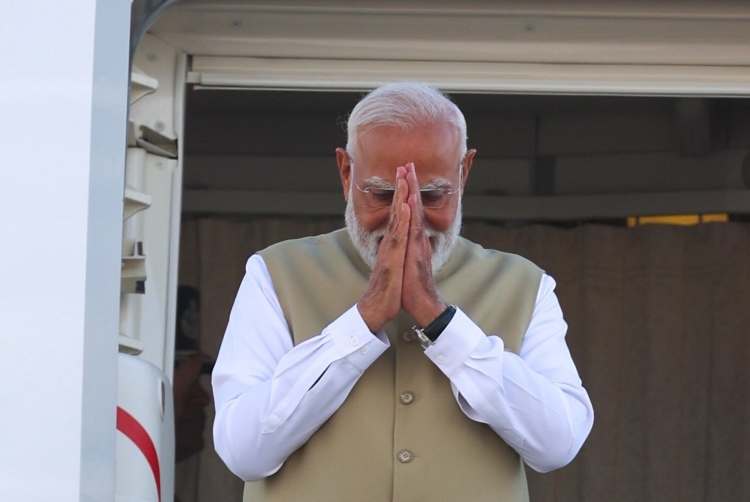
When a PM addresses citizens not with a law or a budget, but with a personal appeal, the signal deserves attention. Prime Minister Narendra Modi has asked Indians to work from home where possible, travel less, buy less gold, reduce cooking oil consumption, use less chemical fertiliser, switch to public transport, and prefer Indian-made goods. The question is not whether such appeals have precedent. They do. The question is whether they can work without price signals, investment and administrative follow-through.
That was the central issue taken up by EGROW Foundation in a special discussion after the Prime Minister Modi’s seven-point appeal. The discussion brought together economists, banking experts, a former parliamentarian and consumer researchers. It did not produce a simple endorsement or rejection. It produced a sharper point: India’s vulnerabilities are real, but moral persuasion cannot substitute for policy.
READ I India’s gold demand is a hedge, not a weakness
India’s oil import vulnerability
India imports around 85% of its crude oil. That single fact explains much of the present anxiety. A spike in oil prices raises the import bill, widens the current account deficit, weakens the rupee, and strains oil marketing companies. The latest West Asian conflict has again exposed the scale of this vulnerability.
There are historical parallels to Modi’s appeals. Lal Bahadur Shastri and Manmohan Singh made appeals in moments of national stress. Winston Churchill did so during the Second World War. Jimmy Carter did so during the energy crisis of the 1970s. Such gestures can create public seriousness. They cannot, by themselves, change consumption behaviour at scale.
The strongest thread in the discussion was therefore the tension between moral suasion and economic incentives. Citizens conserve fuel more reliably when prices rise than when they are asked to do so voluntarily. Appeals work best when they are backed by market signals.
READ I Gold imports, oil prices expose limits of austerity calls
Consumer research presented in the discussion underlined this. On fuel, most respondents were unsure how to cut consumption without a price push. On public transport, the main obstacle was last-mile connectivity. On foreign business travel, respondents said commercial returns justified the cost. On weddings, no one intended to change plans.
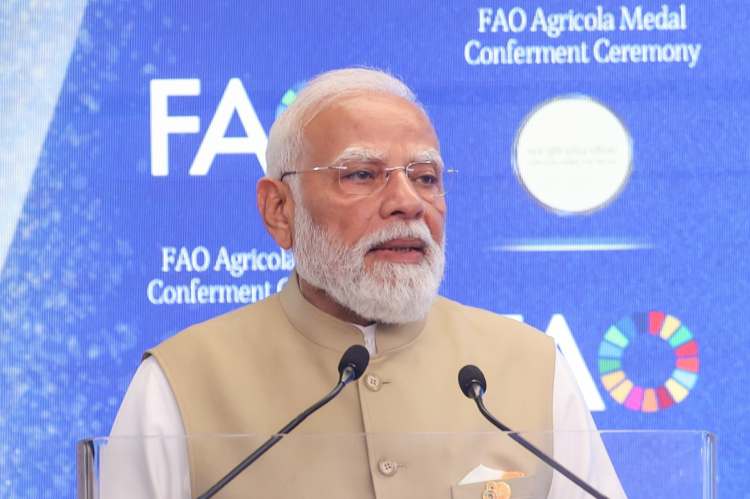

Yet the picture was not wholly bleak. On gold, many were willing to defer purchases for a year. On ghee versus imported palm oil, women consumers showed willingness to switch, but cited contradictory social media messaging and weak official guidance. Some appeals have traction. Others need infrastructure.
Strategic oil security also needs attention. India has diversified crude sourcing and now imports from around 40 countries. The government has said that about 70% of crude imports now come through routes outside the Strait of Hormuz, compared with about 55% earlier. That is useful insurance, but not enough. Strategic reserves, refinery flexibility, shipping security and emergency supply arrangements must sit alongside demand reduction.
READ I Copper import surge exposes India’s mineral policy gaps
Fertiliser reform cannot wait
The fertiliser question is more serious. It is also more familiar. Urea prices have been frozen at ₹5,360 per tonne since 2012, while prices of phosphorus and potassium fertilisers have risen sharply. The result is predictable: overuse of urea, poor soil health and a large fertiliser import bill. This is one of India’s most persistent policy failures. Economists across ideological lines have warned about it for years. The present crisis offers a political opening to act.
The obvious reform is to delink urea prices from the old administered rate and shift the fertiliser subsidy directly to farmers on a per-hectare basis. That would reduce the distortion behind urea overuse. It would also make the subsidy more equitable for small and marginal farmers. Savings could be redirected to irrigation, soil health, storage and rural investment.
Energy security needs a faster transition
The strategic lesson is clear. Energy and critical raw materials are now instruments of geopolitical power. Ukraine, Gaza and Iran have shown that supply chains can be weaponised. India cannot insulate itself through appeals alone. It must build resilience.
Electrification is the most direct route. EV penetration remains low. Renewable generation has grown, but transmission has not kept pace. Solar power is sometimes curtailed even when available because the grid cannot absorb or move it efficiently.
Rooftop solar, electric cooking in commercial kitchens, solar pumps and coal gasification for the fertiliser sector are practical options. None is a full answer. Together, they reduce import dependence.
Edible oil belongs in the same import-dependence frame. India meets only 44% of its edible oil demand through domestic production, according to official data. A call to reduce imported cooking oil therefore cannot rest on consumer restraint alone. It must be tied to oilseed productivity, crop diversification, procurement and credible nutrition messaging.
Public transport needs the same realism. Telling citizens to use buses and metros will not work if stations are poorly connected, pavements are broken, parking is cheap, and services are unreliable. Completing metro links, pricing city-centre parking properly, and subsidising monthly public transport passes would do more than exhortation.
Gold imports and household trust
Gold is not merely a consumption habit. It is a household response to inflation, distrust of financial products and social custom. India’s large private gold holdings are therefore both a weakness and an opportunity.
Indian households hold an estimated gold stock of up to 25,000 tonnes, according to the World Gold Council. Yet the Gold Monetisation Scheme had mobilised only about 31,164 kg by November 2024. That gap explains the real problem. The constraint is not only sentiment. It is trust, convenience, assaying capacity and confidence in formal instruments.
A redesigned Gold Monetisation Scheme, supported by modern assaying, credible bullion standards and simpler procedures, could draw idle gold into the financial system. But that will happen only if households trust the instrument. Trust comes from low inflation, macroeconomic stability, strong regulation and fair treatment of savers.
Prime Minister Modi’s appeal to avoid gold purchases for a year may reduce demand at the margin. A deeper shift requires households to see financial savings as safer and more rewarding.
Modi’s appeals need follow-through
The most important recommendation from the siscussion was institutional. The seven appeals from Narendra Modi should not disappear as another well-meaning campaign. They need measurable targets, assigned responsibility and public monitoring.
A high-powered inter-ministerial task force should convert each appeal into a time-bound programme under the Viksit Bharat 2047 framework. It should estimate the macroeconomic effect of a 5–10% reduction in fuel use, gold imports, edible oil imports and fertiliser consumption. Citizens should know what their choices mean for the import bill, the rupee and public finances.
The burden of adjustment must also be shared. Consumers may have to face partial fuel price pass-through. Oil marketing companies can absorb part of the shock from recent profitability. The Union government may need limited countercyclical fiscal flexibility. But fuel price pass-through is not socially neutral. It feeds into transport, food and household inflation, and hurts informal workers and small enterprises first. Any correction must therefore be paired with targeted relief and stronger public transport support.
Credibility is equally important. Citizens are more likely to accept restraint when the state demonstrates it first. Official travel, public expenditure, large events and visible symbols of consumption must reflect the same discipline being asked of households. Otherwise, moral suasion will look asymmetrical.
India has managed oil shocks before. It will manage this one too. The real test is whether it emerges with stronger institutions, lower import dependence and better incentives. The EGROW discussion showed that the ideas exist. What is needed now is execution.
A crisis should not be wasted.
Based on the proceedings of a discussion organised by EGROW Foundation on the Prime Minister’s seven-point national appeal on economic self-reliance.