


MSME credit: Indian banks are shifting attention to corporate and MSME lending as retail credit loses momentum. For small businesses, this should mean easier access to formal finance. In practice, the improvement remains uneven. Banks are lending more to small businesses but not necessarily to the smallest or most vulnerable firms. The original draft captured this tension clearly; the revised version adds the institutional plumbing needed to explain why higher credit growth has not yet become wider access.
The latest earnings of private sector banks show business banking and MSME portfolios emerging as important growth drivers. Retail credit has moderated after regulatory tightening in unsecured loans, slower consumption, and the fading of earlier refinancing demand. At the same time, business demand has improved in manufacturing, renewables, electronics, and defence-linked supply chains. Banks with surplus liquidity have found these segments more attractive than unsecured retail loans.
READ | Viksit Bharat needs a different MSME playbook
MSME credit gap remains stubborn
The larger problem has not disappeared. Formal credit remains hard to access for many micro and small enterprises. Banks continue to be wary of small ticket loans, thin documentation, high servicing costs, and weak collateral. Headline MSME credit growth, therefore, cannot be read as broad financial inclusion.
This distinction matters because the MSME universe is overwhelmingly made up of micro enterprises. The MSME ministry’s dashboard showed 7.94 crore registrations, including Udyam and Udyam Assist Platform registrations, as on May 5, 2026. Of these, 7.88 crore were micro enterprises, compared with 4.91 lakh small enterprises and 37,057 medium enterprises. The employment figure on the same dashboard stood at 35.06 crore.
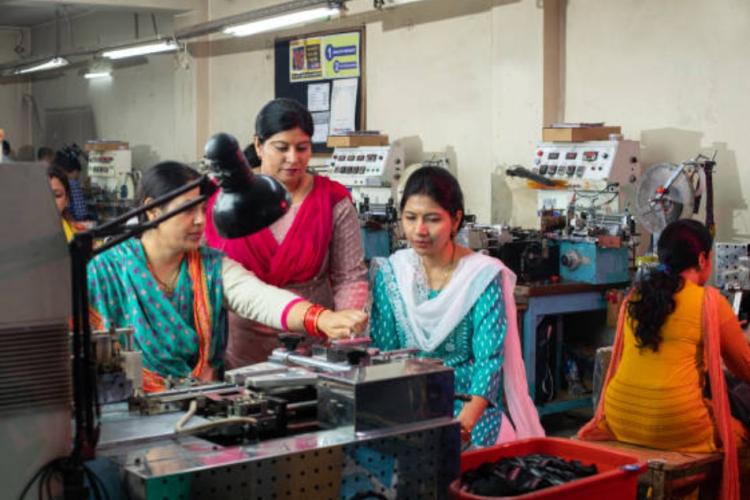
The firms most visible to banks are often those already linked to large buyers, export chains, or formal industrial clusters. They have transaction histories, GST records, and predictable cash flows. The standalone micro enterprises that form the bulk of India’s MSME base remain less attractive to formal lenders. This is where the gap lies. The policy problem is not merely MSME credit. It is micro-enterprise credit inside the larger MSME category.
Cash-flow lending can widen access
One important shift is the move from collateral-based lending to cash-flow assessment. This has long been recommended by policymakers. GST returns, digital payments, bank transactions, and invoice histories can help lenders assess business viability better than land, buildings, or fixed assets.
The logic is sound. Traditional lending has excluded viable but asset-poor enterprises. A cash-flow model can bring such firms into the formal credit system, especially where their sales and payments leave a digital trail. But adoption is still selective. Banks prefer firms with cleaner data, better ratings, and stronger buyer linkages.
That is why the delivery architecture matters. Cash-flow lending cannot be built only on a bank manager’s discretion. It needs reliable GST trails, consent-based financial data sharing, bank statement analytics, invoice records, TReDS participation, fintech underwriting, NBFC co-lending, and SIDBI-linked refinancing or risk-sharing mechanisms. The Account Aggregator framework, introduced under RBI directions in 2016, allows financial data to move between institutions only with the customer’s explicit consent.
READ | India’s MSMEs face a cash-flow crisis as Iran war prolongs
The government has also recognised this institutional need. A March 2025 PIB release listed TReDS, the Account Aggregator framework, regulatory sandbox work on MSME lending, the Unified Lending Interface, SIDBI’s GST Sahay app for invoice-based small-value credit, and the Udyam Assist Platform for informal micro enterprises as measures to improve credit access.
This is the missing bridge between policy ambition and bank lending. Without this digital and institutional plumbing, cash-flow lending will remain concentrated among borrowers already visible to banks. The point is not that data will solve credit exclusion by itself. It is that without reliable data and risk-sharing channels, banks will continue to ration credit to better-documented firms.
Credit guarantees cannot replace discipline
The government has expanded credit support through guarantee schemes and manufacturing-linked MSME programmes. These allow banks to lend without insisting on conventional collateral. They also reduce the perceived risk of lending to first-time borrowers.
The MSME ministry dashboard showed 1.41 crore guarantees under CGTMSE, with a value of ₹13.67 lakh crore, as on March 31, 2026. The government has also modified the Mutual Credit Guarantee Scheme for MSMEs. The scheme provides 60% guarantee coverage by the National Credit Guarantee Trustee Company to member lending institutions for credit facilities up to ₹100 crore for purchase of plant, machinery, or equipment. The March 2026 modification expanded coverage, reduced compliance burden, included service-sector MSMEs, and introduced special provisions for exporter MSMEs, including 75% guarantee coverage on the amount in default for eligible exporters.
But guarantees are not a substitute for credit discipline. Banks face a difficult balance. The government wants more MSME lending. The Reserve Bank of India expects lenders to watch asset quality and identify stress early. The question is not whether banks should lend more. It is how they can expand MSME credit without building the next bad-loan cycle.
Guarantees work best when they support viable borrowers who lack collateral. They work poorly if they become a way to postpone credit appraisal. The next phase of MSME lending must therefore combine guarantees with better borrower data, closer monitoring, and quicker recognition of stress.
Delayed payments weaken MSME finance
The credit constraint does not arise only at the bank counter. Delayed payments from larger buyers continue to weaken MSME cash flows. Many small firms remain viable on paper but face working capital stress because receivables are not cleared on time.
This is not only a financing problem. It is also an enforcement and market-power problem. The MSME Samadhaan portal allows any micro or small enterprise with valid Udyam registration to apply for delayed-payment relief. The Micro and Small Enterprise Facilitation Council can direct the buyer to pay the due amount with interest under the MSMED Act, 2006. The portal also states that buyers are liable to pay compound interest with monthly rests at three times the RBI-notified bank rate if payment is not made within 45 days of acceptance of goods or services.
This legal framework is important, but enforcement remains the test. TReDS and invoice discounting can convert pending invoices into usable liquidity. For micro and small enterprises, this may be more useful than a fresh term loan. But such platforms cannot fully correct the imbalance between a small supplier and a large buyer. Payment discipline must be enforced, not merely financed.
Micro enterprises still left behind
In the absence of reliable formal finance, many micro enterprises continue to depend on informal lenders, supplier credit, or family funds. This keeps borrowing costs high and limits investment in technology, inventory, and expansion.
READ | Budget 2026: Export facilitation and MSME liquidity take centre stage
Even within formal lending, banks prefer better-rated MSMEs with established relationships. Current MSME credit growth is therefore concentrated among firms tied to high-growth sectors or larger corporate ecosystems. The segment most in need of affordable credit remains underserved.
This is why the composition of credit matters as much as its growth rate. A rise in MSME lending may still bypass the neighbourhood manufacturer, the job-work unit, the rural service provider, or the small trader who lacks collateral but has regular turnover. These businesses may not need large loans. They need timely working capital, predictable payment cycles, and access to formal credit without excessive documentation.
MSME credit needs stronger institutions
Other economies have shown that MSME finance cannot be built on bank lending alone. Successful systems use credit guarantees, development finance institutions, digital information networks, and reliable payment discipline. Lender confidence is built through institutions, not exhortation.
India has made progress on digital financial infrastructure and guarantees. The missing test is reach. Credit must move beyond the better-documented, better-connected MSMEs that banks already understand. Otherwise, MSME finance will become another story of formal growth with informal exclusion.
Investment in manufacturing and infrastructure should sustain demand for MSME credit. External uncertainty, however, could affect lender appetite. Bank executives also expect retail lending to recover in FY27, which may again shift priorities.
The policy challenge is clear. MSMEs are no longer peripheral to bank growth strategies. But higher portfolio growth is not the same as universal credit access. The next phase must expand guarantee coverage, deepen cash-flow lending, enforce payment discipline, and strengthen the institutional channels that connect data, risk-sharing, and last-mile credit delivery. Without that, India will have more MSME lending, but not necessarily a stronger MSME economy.