


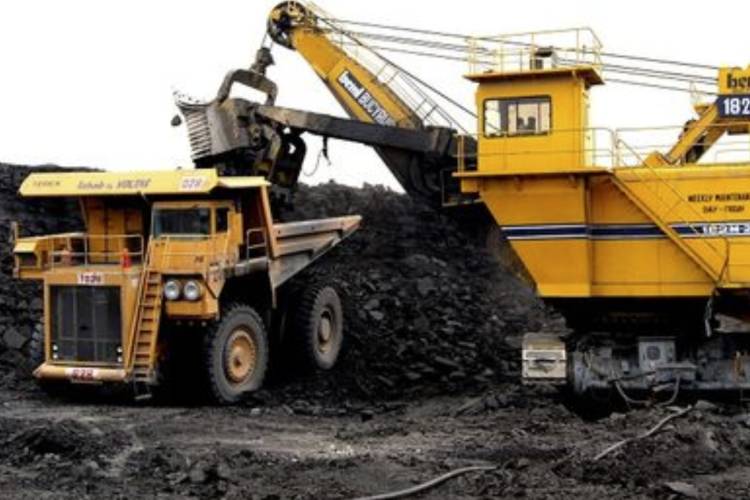
India’s coal shortage 2026: India is not running out of coal. Yet a large part of its thermal power fleet is running short of it. As of September 24, coal stocks at 80 of 190 thermal power plants were below 25% of their prescribed levels. By September 26, the number had fallen to 77, but the stock at these plants had declined further to 21.98 million tonnes, from about 29 million tonnes on August 31.
The immediate problem is less about the amount of coal available in India than about getting it to the power plants that need it. Coal sitting at mines cannot generate electricity. It has to move through a chain involving loading facilities, railways, transit routes and plant stockyards. When that chain slows, electricity shortages can emerge even when aggregate coal availability remains comfortable.
READ | Coal gasification can cut imports, but at a high cost
That distinction matters because India is entering a period in which electricity demand is rising while the generation mix is changing. In March, the Ministry of Coal said total coal stocks across mines, power plants and transit had reached about 210 million tonnes, equivalent to roughly 88 days of consumption. Coal stocks at thermal power plants stood at 54.05 million tonnes, enough for nearly 24 days at the prevailing rate.
Those figures show why the present problem should not be described simply as a shortage of coal. The issue is the location and timing of the fuel supply. And it has become more consequential because thermal generation is having to compensate for weaker generation elsewhere.
Hydropower generation was 12% lower than a year earlier in the first three weeks of September, while coal-fired generation was up 18% in the month, according to data cited by Business Standard. At the same time, peak electricity demand reached 269 GW on September 10, the highest recorded for September and close to the year’s peak of 270.82 GW reached in May. Night-time power shortfalls have risen above 7 GW.
The Central Electricity Authority’s planning estimate for 2026-27 had put peak demand at 272 GW. The margin between that projection and actual demand is now small enough to make fuel availability and plant-level logistics central to system reliability.
September leaves little room for logistics failures
The coal-stock position needs to be read against the CEA’s stocking norms. September has the lowest prescribed inventory requirement of the year: 12 days for pithead plants and 20 days for plants located away from the mines. The requirements rise after the monsoon, reaching 17 and 26 days respectively in February and March.
This seasonal pattern is important. The September norm is already the leanest point in the annual cycle, just before plants are expected to rebuild inventories. A plant classified as having critical stocks is not necessarily about to shut down. The classification refers to stocks below 25% of the normative requirement. But it does mean that the buffer available to absorb a disruption is thin.
India has seen this vulnerability before. In October 2023, coal stocks at thermal power plants fell to about 7.5 days of cover. In September 2021, stocks fell to roughly four days amid supply-chain disruptions. Neither episode meant that India had exhausted its geological coal reserves. The problem was that supplies were not reaching generating stations fast enough to match consumption.
The lesson is straightforward. A power system that relies heavily on coal can have substantial stocks somewhere in the country and still face stress at individual generating stations. National availability is an incomplete measure of fuel security.
READ | India’s energy security cannot rest on coal alone
The government is responding mainly through operational measures. Coal transportation to plants facing shortages has been accelerated, while the Centre has invoked Section 11 of the Electricity Act to bring additional generating capacity into the system.
Under the latest direction, about 112 captive coal-fired generating stations with capacity of 50 MW or more have been asked to operate at their maximum available capacity from October 1 to December 31. After meeting their own captive requirements, they are required to offer surplus generation through power exchanges.
That can provide an additional buffer during periods of tight supply. But it does not solve the underlying logistics problem. More generation from captive plants still requires fuel, and the measure is temporary.
India’s coal shortage: Imported coal is a useful buffer, but an expensive one
The other option under consideration is imported coal. India already imports substantial quantities of non-coking coal. Ministry of Coal data show imports of 180.04 million tonnes of non-coking coal in 2025-26, while total coal imports were 246.37 million tonnes.
Imported coal can help plants maintain generation when domestic supplies are disrupted, particularly where plants are technically equipped to use it. But it exposes electricity producers to international coal prices, ocean freight, insurance, exchange-rate movements and port logistics. For plants designed primarily around domestic coal, blending imported fuel can also involve technical and commercial complications. The government has used imports for blending in earlier periods of tight domestic supply.
The policy question is not whether imported coal can help. It can. The question is whether repeated reliance on imports should become a routine way of compensating for weaknesses in the domestic coal supply chain.
That would shift part of India’s electricity-security problem from railways and domestic mines to global commodity markets and ports. It may be justified during periods of acute stress, but it is not a substitute for a more reliable domestic logistics system.
READ | Coal block timelines: Can strict deadlines fix production delays?
The energy transition does not remove the reliability problem
India’s longer-term electricity challenge is becoming harder because demand is rising at the same time as the generation mix changes. Solar power can reduce dependence on coal during daylight hours, but it cannot supply electricity after sunset without storage. Hydropower can provide flexibility, but output varies with water availability. Batteries and pumped storage can reduce the gap, but their contribution will depend on how quickly the planned capacity is commissioned and integrated into the grid.
This makes coal less important to India’s long-term energy transition while leaving it highly important to short-term reliability. The country can continue expanding renewable capacity and reducing the share of coal in electricity generation while still needing its thermal fleet to run at high utilisation during periods of weak renewable output and strong demand.
That is why the present coal-stock squeeze deserves to be viewed as more than a temporary inventory problem. The power system’s vulnerability increasingly lies in the distance between where coal is mined and where electricity is consumed.
India can produce more coal, and it can maintain large inventories at the mine mouth. But unless the railways, loading facilities, transit routes and power-plant stockyards can move that coal reliably to the right generating stations, aggregate production will offer limited protection against a demand spike.
For an economy adding factories, data centres, air-conditioners and electric vehicles, tonnes produced at the mine are only one measure of energy security. The more consequential measure is whether fuel reaches the generator when the grid needs it.