


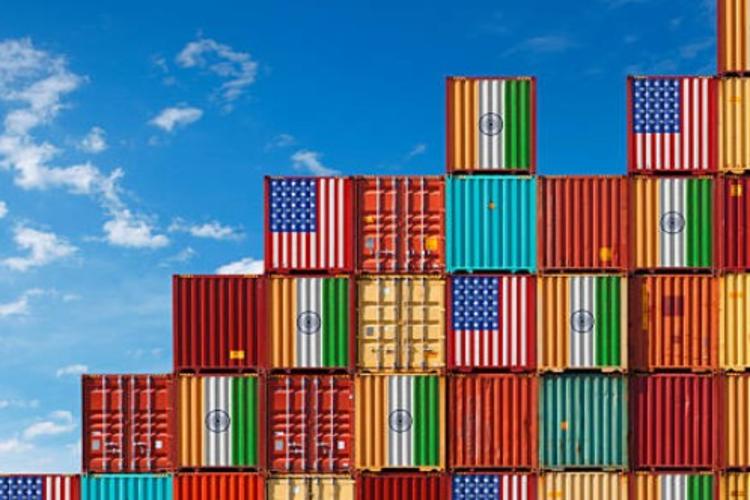
India-US trade deal: The India-United States trade negotiations are set to resume, with an Indian delegation expected to travel to Washington later this month. The two nations were expected to close an interim trade deal in early March. But a recent US Supreme Court ruling, which curtailed the executive’s use of emergency powers to impose country-specific tariffs, has left American trade policy in flux. Meanwhile, a deal with India hangs in limbo and a near-complete agreement has become a moving target.
India and the US had announced a trade deal on February 2 and a joint statement followed on February 7. According to the interim deal, the US had agreed to reduce tariffs on India to 18%. The wider framework was also linked to a broader bilateral trade agreement and to efforts to expand two-way trade over time, which made the interim pact more than a narrow tariff truce.
READ | US drug tariffs put India’s CDMOs at risk
The original understanding between New Delhi and Washington was modest in ambition but not trivial. It involved tariff reductions, the removal of certain punitive duties imposed on Indian exports and a pathway to address long-standing issues such as non-tariff barriers. For India, the rollback of additional tariffs linked to its purchase of discounted Russian oil was a notable win. For the United States, the deal promised incremental market access and a demonstration that its friend-shoring strategy could yield tangible outcomes with a large emerging economy.
While all looked smooth for a while, the ground shifted quickly. The US Supreme Court ruling in February effectively dismantled the legal basis for a key component of the Trump-era tariff toolkit, namely the use of the International Emergency Economic Powers Act to impose reciprocal duties. The US administration then moved to a temporary 10% tariff under another statutory route and signalled that fresh trade action could still come through unfair-trade and national-security laws. That changed India’s calculation. New Delhi was no longer dealing with a settled tariff regime, only with a changing one.
India-US trade deal and strategic caution
What India has done in the meanwhile is be strategic. Rather than rushing to sign an interim pact that could have been overtaken by new tariff rules, New Delhi has chosen to wait. There is a rising awareness that trade agreements are only as valuable as the stability of the regimes they operate within. Entering into a deal amid flux could expose Indian exporters to renewed uncertainty. That is not the point of any trade deal.
However, there is more to the India-US relationship than trade. There is cooperation on the defence front, a shared distrust of China and increased coordination in geopolitics. But the shadow of ongoing global conflicts looms large.
READ | US superpower status will be diminished by any Iran exit
Unlike its more clearly defined position on Ukraine, India’s approach to the Iran crisis has been one of careful calibration. New Delhi has longstanding ties with Iran and ongoing strategic partnerships with Gulf economies while also deepening security cooperation with the United States. The tensions are no longer abstract to trade negotiations. The US has already shown its discomfort with India’s purchase of Russian oil, which led to tariff actions and market-access pressure. A similar dynamic could emerge if the Iran situation intensifies, particularly if secondary sanctions or shipping disruptions begin to affect trade flows.
Geopolitics, shipping disruption and sectoral risk
Beyond the immediate crisis, the global situation is uncertain. Disruptions in the Strait of Hormuz and nearby shipping routes have made it harder and more expensive to move goods. For India, this has created a mixed picture. In the short term, higher costs and delays will hurt exporters. Over time, as Western countries look to reduce their reliance on China, new opportunities may open for Indian businesses.
But the vulnerability is not only logistical. India imports roughly 90% of its oil needs, so any disruption in West Asia quickly feeds into crude prices, the rupee, inflation and the current account. That macroeconomic pressure narrows New Delhi’s room for trade concessions and makes the external environment of any deal more fragile than headline diplomacy suggests.
The United States is central to this transition. Its push for resilient and trusted supply chains has increasingly positioned India as a key partner. But analysts have often pointed out that strategic intent has not translated smoothly into trade outcomes. Persistent issues around market access, regulatory standards and digital governance continue to slow progress, even as both sides acknowledge the larger alignment.
There is another complication. Even after the court ruling, the United States has kept sector-specific trade instruments active. Recent moves on steel, aluminium, copper and pharmaceuticals show that future friction may come less from an economy-wide tariff bargain and more from targeted industrial and national-security measures. An interim understanding with India may therefore coexist with continuing pressure on key sectors.
READ | US-India tariff deal: What it means for Indian economy
The upcoming talks in Washington must therefore be carefully watched. They are not merely about tariff schedules or technical barriers but about ensuring that the economic relationship can withstand geopolitical shocks. Non-tariff barriers will be a central focus, alongside clarity on legacy issues and on how far any future sectoral actions could cut across the spirit of a bilateral understanding.
Domestic politics and the limits of the pact
However, both nations will also be required to address domestic politics. In the United States, trade is a politically sensitive domain, shaped by concerns over jobs and industrial policy. In India, the emphasis on self-reliance and domestic capacity-building will not leave much room for sweeping concessions. Simply put, the US-India trade deal is highly unlikely to be transformative.
Both countries recognise that the costs of disengagement are far higher than the frictions of negotiation. India’s growth trajectory and market potential are compelling, while the United States continues to offer capital, technology and strategic depth. The relationship has shown an ability to absorb shocks and move forward.
The current pause in negotiations may serve a useful purpose. It allows both sides to align their economic objectives with a rapidly changing geopolitical situation. It is better to sign a deal late than be stuck in one that soon looks outdated.
For now, the forthcoming discussions in Washington will be an exercise in resetting expectations. They may not deliver a headline breakthrough, but they may at least offer a clearer sense of direction.