


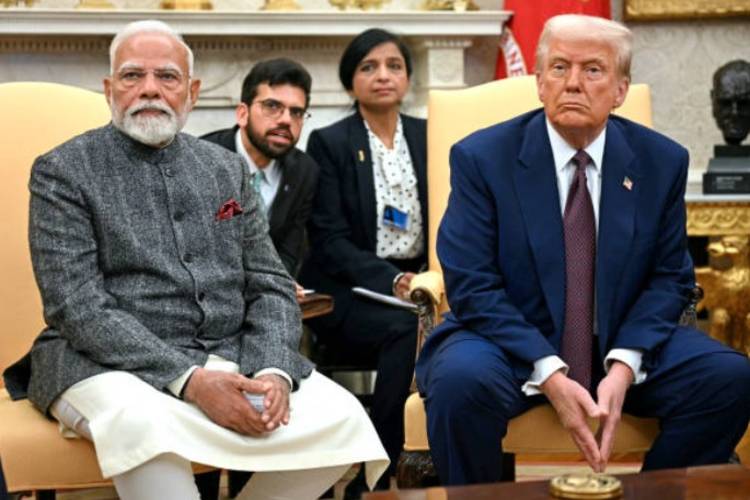
The most consequential and high-octane trade deal has finally materialised after years of negotiations i.e the India-US trade deal. The pact has evolved from a simmering dispute over tariffs and strategic dependencies into a deal that may reshape not only economic ties between New Delhi and Washington but also the political economy of Asia at large. The last couple of months have seen dramatic tariff hikes with duties on Indian shipments to the United States climbing to as high as 50% but both sides are now claiming victory of sorts.
At the heart of the initial deal is a straightforward proposition that reciprocal tariffs will be softened. The United States will lower its duties on Indian goods from punitive levels toward 18% while India will reduce tariffs on US products, in many cases to zero. Considering the game Washington was playing at with explosive tariffs, this deal is remarkable.
READ | India-US trade deal: Tariff relief and trust deficit
The steep cuts in tariff on Indian exports to the US will take effect ‘in the next 4-5 days’ on the signing of the joint statement between the two countries, Commerce and Industry Minister Piyush Goyal said Thursday. India will lower its tariffs for American goods after mid-March, he added.
Specifics of India-US trade deal
Firstly, Indian tariff barriers to American goods including industrial products and agricultural commodities will be significantly lowered. Jamieson Greer, the US Trade Representative, said that India agreed to cut average industrial tariffs from 13.5% to zero on virtually all goods, while agricultural duties on items such as tree nuts, wine, fruits and select vegetables would also drop to zero.
However, India has not opened the gates to sensitive sectors such as rice, dairy, sugar, soybeans and certain genetically modified products which have been explicitly excluded from tariff liberalisation. This also aligns with India’s stance in its recent European Union trade agreement.
Agriculture has been a sticky point in the negotiations and the protection of India’s core agricultural base which comprises staples that underpin food security and millions of livelihoods has been preserved at least rhetorically. Commerce Minister Piyush Goyal assured Parliament that farmers’ interests and other sensitive sectors are protected. The optics matter at home as it signals that India did not budge. It also aligns neatly with India’s recent trade interactions with other allies.
READ | What India-EU FTA means for exports, industry and services
The agreement is not simply about reducing import taxes. Both sides have attached broader strategic commitments. India has indicated it will scale up purchases of US products from energy and aircraft to defence equipment and technology. The goal is an ambitious trade of $500 billion over several years.
The United States has long chafed at India’s energy ties with Russia, particularly purchases of Russian crude that have continued despite sanctions regimes elsewhere. US President Trump stated that India agreed to halt buying Russian oil but Moscow disputed the same, saying no such notification has been received from New Delhi. Ideally, a geopolitical row should not have become intertwined with what should have been a commercial agreement.
But critics argue this places undue pressure on India’s energy autonomy, particularly at a time when global markets remain volatile. Analysts have also pointed out that India’s purchase of $500 billion in US goods may be more aspirational than achievable. Currently, bilateral trade currently stands at a fraction of that figure. Realistically speaking, how is India going to buy $500 billion of anything from the United States when US goods exports to India in 2024 were $41.5 billion. A 500% increase seems like a pipedream.
READ | US-Canada trade enters an era of leverage and limits
There are many other questions that still remain unanswered. The deal is simply thin on details. There is considerable ambiguity over whether this is the first tranche or ‘mini-deal’ of a larger Bilateral Trade Agreement, a limited deal affecting only tariffs, or something in between. What is the precise list of products covered? What mechanisms will ensure compliance and phased tariff reductions? Will domestic industries harmed by sudden import surges be compensated or protected through safeguards? The two nations are yet to finalise the text of the joint statement and this process could stretch over weeks. Until then, more clarity remains elusive. Official agreement is expected by mid-March.
Then there is Trump’s assertion that PM Modi has agreed to stop buying Russian oil. This must be addressed by the Indian government sooner rather than later. Stopping Russian oil entirely would not only force India to find alternatives for about a third of its oil imports but would also cast a shadow over its relations with Russia. Moscow is a long-time friend and critical supplier of defence equipment and this sudden break-up would announce a very definite realignment for India. Similarly, buying more Venezuelan crude comes with its own refining challenges.
Earlier, India concluded a long-anticipated free trade agreement with the European Union which covered the vast majority of tariff lines. The US agreement is not an isolated pivot but part of a larger strategy to diversify India’s economic engagements while protecting domestic priorities. Unlike the EU pact, however, the US deal is less a comprehensive free trade agreement and more a framework of negotiated concessions peppered with strategic bargains.
The new India-US trade deal will also strengthen India’s role as a key alternative to China in global supply chains. As companies look to diversify production under the “China + 1” strategy, Indian exports becoming more competitive in the US will encourage multinational firms to consider India for manufacturing and sourcing. All in all, the pact could erode China’s dominant position in sectors from textiles to chemicals and electronics and undercut Beijing’s share in US imports. This alignment also reflects broader geopolitical realignments in which the US seeks to balance China’s influence by deepening economic ties with India.
The problem however is the Trump flip-flops. The Trump government loves tariffs and this tool can be used whenever any issue erupts. South Korea and Canada believed that they had made deals, only to discover that the terms of such deals are subject to fresh threats and perpetual renegotiation. While Washington and New Delhi are in a better place than they’ve been since August last year, the India-US deal must be taken with a pinch of salt.