



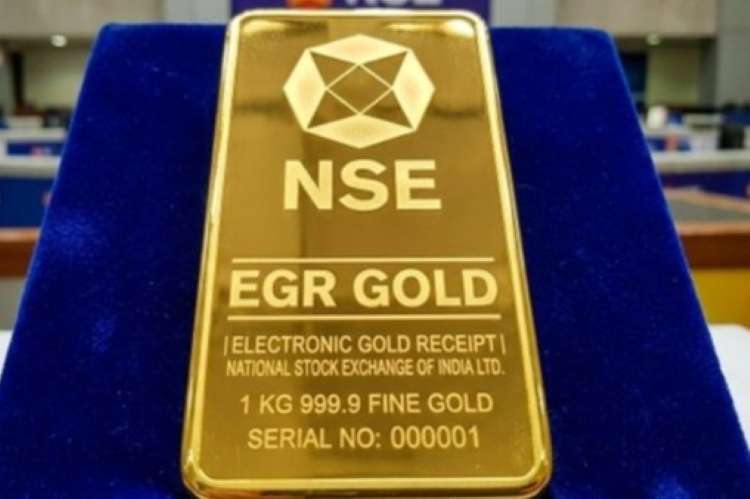
For Indians, gold is both a household asset and a major import. That creates a policy tension that is becoming more relevant as organised markets make it easier to own and trade gold in financial form. The National Stock Exchange plans to launch a pilot app for electronic gold receipts (EGRs) on October 15, expand its authorised collection-centre network to more than 1,000 and offer EGRs in denominations from 10 mg to 1 kg. The initiative is intended to make physical gold easier to convert into dematerialised holdings and trade through a demat account.
There is a sound economic case for bringing existing household gold into the formal financial system. There is a weaker case for policies that encourage households to buy more newly imported gold. The distinction matters because the same asset that protects a household against rupee depreciation can add to the country’s demand for foreign exchange.
READ I World gold prices have a higher floor despite Fed rate hikes

India’s external accounts are not under immediate stress. But the latest numbers offer little reason to treat additional gold imports as economically costless. The Reserve Bank of India reported that the current account deficit widened to $4.2 billion, or 0.5% of GDP, in the first quarter of 2026-27, from $3.4 billion, or 0.4% a year earlier. The merchandise trade deficit rose much more sharply, to $86.1 billion from $68.9 billion. Higher services receipts and remittances provided an important cushion, but they do not eliminate the foreign-exchange cost of imports.
Gold is part of that import bill. In its assessment of the first quarter, the RBI said the wider merchandise trade deficit reflected higher imports of crude oil, electronic goods and gold. Gold differs from crude oil in an important respect: oil is an essential input into transport, industry and household energy use, while imported gold is primarily a store of wealth, jewellery or an investment asset.
READ I Double deflation and the quality of GDP estimates
Weaker rupee changes the calculation
The macroeconomic problem becomes more visible when the rupee weakens. Gold is internationally priced in dollars, so a depreciation of the rupee raises its domestic price even when the dollar price of gold is unchanged. That can strengthen the incentive for households to hold gold as protection against currency depreciation.
The World Gold Council’s data show how strongly exchange rates have affected domestic prices this year. In the second quarter of 2026, the rupee depreciated 4% against the dollar. Domestic gold prices nevertheless remained 59% above their level a year earlier, even though international gold prices had eased from their first-quarter peaks.

For an individual household, buying gold in response to currency weakness can be a rational form of asset protection. At the national level, however, a broad shift towards newly imported gold creates another demand for foreign exchange. If households increase their purchases at a time when the rupee is already under pressure, the resulting import demand can add to the trade deficit and make gold still more expensive in rupee terms.
That is the contradiction policymakers need to recognise. The issue is not household ownership of gold as such. It is the repeated conversion of domestic savings into newly imported physical gold.
India’s gold market is large enough for the distinction to matter. In the second quarter, the country consumed 131 tonnes of gold, according to the World Gold Council. Net bullion imports were 98 tonnes, accounting for 82% of supply. Recycled gold contributed 16%, while domestic mine production accounted for 2%.
READ I CAFE-III must make green mobility affordable in India
EGRs can formalise gold already in households
This is where electronic gold receipts offer a different policy proposition.
An EGR backed by gold deposited with an authorised vault does not, by itself, require another quantity of gold to be imported. An investor who deposits existing jewellery or bullion can receive a dematerialised claim that can be held and traded through the formal market. NSE already lists EGR products in denominations ranging from 10 mg to 1 kg and provides for their holding in demat accounts.
The proposed expansion of collection centres could make this process more accessible. NSE’s planned pilot app is intended to allow physical gold to be converted into dematerialised EGR holdings, while the exchange plans to take its authorised collection-centre network beyond 1,000.
That can improve the financial treatment of an asset that households already possess. It can also make the market more transparent and potentially increase liquidity. Most importantly, formalisation need not imply fresh imports.
The distinction is visible in the latest supply data. In Q2, recycled gold accounted for 16% of India’s gold supply. The World Gold Council defines recycled gold as gold sold for cash; jewellery exchanged for new jewellery is excluded from that measure. Recycling therefore has room to become a more important source of domestic supply without adding to import demand.
Policy should favour recycling over fresh accumulation
The government’s objective should therefore be to make existing gold more productive before encouraging another cycle of gold accumulation.
That means supporting reliable systems for assaying, vaulting, recycling and trading old gold, while reducing the transaction costs that push households towards informal channels. EGRs can form part of this market infrastructure if they develop sufficient liquidity and if the conversion from physical gold to financial holdings is simple enough for ordinary households.
There is also a consumer-policy question. India’s attachment to physical gold is deeply established, and financial alternatives will not displace it merely because they are more efficient on paper. Any attempt to move savers away from physical gold has to recognise why households value an asset they can possess directly and use as collateral or jewellery.
The more practical objective is therefore narrower. When households want to monetise gold they already own, the financial system should give them a regulated alternative to selling or pledging it through informal channels. When they are deciding where to put new savings, policy should avoid creating incentives that translate directly into another import.
Gold will remain an important part of Indian household balance sheets. The policy question is whether that stock of gold can be made more liquid and productive without continually adding to the country’s import bill. Formalising existing gold helps address that problem. Encouraging another round of imported gold does not.