


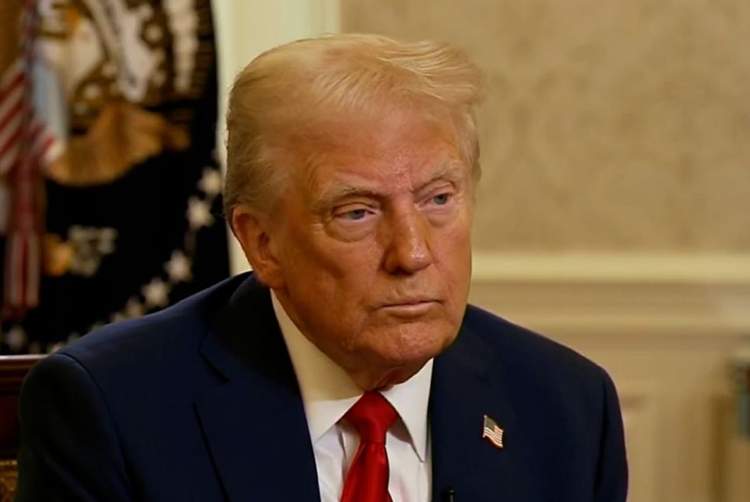
Trump’s foreign policy transition: Donald Trump was never an anti-war politician in the conventional sense. He was anti-cost, anti-restraint and anti-failure. That distinction matters now, because the gap between the mythology built around him and the foreign policy he is pursuing has become too wide to ignore. The president who was sold to many voters as a breaker of futile wars now speaks in the language of territorial acquisition, regime removal and unconstrained executive force.
The United States has struck Iran, the Senate has failed to reassert Congress’ war powers, and Trump has continued to float the takeover of Greenland, the reassertion of control over the Panama Canal, the absorption of Canada, and even an American takeover” of Gaza. This is not non-interventionism. It is imperial ambition with fewer disguises.
What has changed is not Trump’s core instinct. What has changed is the operating environment around him. In his first term, institutions, advisers and circumstance imposed some friction. In his second, the friction is weaker, the loyalists are bolder, and the ideological synthesis around him has hardened. The result is a foreign policy that treats sovereignty as negotiable, law as an inconvenience and military force as one more instrument of personal will. The old bipartisan American habit of intervention at least claimed to be in the service of democracy, alliance solidarity or international order. Trump has stripped away even that vocabulary. What remains is a cruder doctrine: power should prevail because it can.
READ I Why a post-Khamenei Iran may resist US designs
Why the anti-war label never fit Trump
The misconception arose because Trump broke with one strand of post-Cold War Republican rhetoric. He mocked the Iraq war, derided nation-building and showed little patience for the moral language that accompanied American interventions after 1991. To parts of the American right, exhausted by Afghanistan and Iraq, that sounded like restraint. To some independents, it sounded like realism. To others, it suggested a leader less likely to drag the United States into ideological wars.
But opposition to liberal interventionism is not the same as opposition to force. Trump’s record has long pointed elsewhere. He did not reject coercion. He rejected costly coercion that did not deliver visible advantage. Even before returning to office, he treated foreign policy as a sequence of deals, threats and demonstrations of dominance.
Reuters reported in early 2025 that Trump refused to rule out military or economic coercion in pursuit of Greenland and the Panama Canal, while also toying with the idea of Canada as the 51st state. That is not the language of a retrenching republic. It is the language of a president who sees borders, alliances and sovereign rights as variables in a negotiation led by Washington.
The anti-war myth survived because many observers confused Trump’s contempt for liberal pieties with a coherent doctrine of restraint. There was none. His foreign policy has always been transactional, theatrical and deeply personal. Think-tank and analytical work over the past year has repeatedly described the emerging order around Trump in terms of spheres of influence, coercion and transactionalism rather than law-bound leadership.
Carnegie’s analysis of Europe under Trump argues that his return has accelerated a world of spheres of influence. Foreign Affairs has warned that his style of power politics is comfortable with such spheres if they can be traded among major powers. Brookings and other analysts have also noted the extent to which Trump’s statecraft is driven by spectacle, leverage and unilateral action rather than durable institutional strategy.
READ I Iran conflict will accelerate the global shift away from oil
Iran reveals Trump’s foreign policy doctrine
The clearest evidence lies in Iran. The United States and Israel launched joint strikes on February 28, 2026, widening the conflict dramatically. Congress then tried to reclaim some authority. On March 4, the Senate rejected a resolution designed to halt further military action without congressional approval. A conflict of major consequence had thus moved forward under presidential initiative while the legislature failed to impose a constitutional check.
Brookings called the moment dangerous not only for the region but for the United States itself. The Brennan Center argued that the strikes were unconstitutional absent congressional authorisation. Even where legal scholars differ on the outer edge of presidential power, the political meaning is unmistakable: Trump has acted first and left institutions to catch up later, if they can.
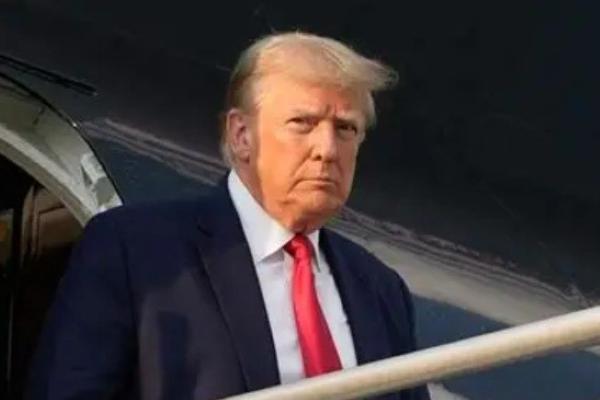

Iran also exposes the intellectual fraud in the “peace candidate” branding. Trump did not come to office committed to diplomatic restraint. Carnegie’s nuclear-policy coverage in February 2026 recorded the rapid US military buildup around Iran even as talks flickered. Brookings, reviewing the earlier June 2025 US strikes on Iranian nuclear facilities, described them as a major shift in American Middle East policy. This was not an accidental slide into war. It was the culmination of a style that treats diplomacy as an ultimatum backed by force, and force as proof of presidential resolve.
Nor is the rhetoric incidental. Trump’s appeal to Iranians to “take over your government,” as cited in the material provided, sits in a long and ugly American tradition: exhort populations to revolt, hint at liberation, then let them bear the consequences. Hungary in 1956, Cuba in 1961, Iraq in 1991 and Afghanistan after the Soviet withdrawal all showed how quickly promises of freedom can collapse into abandonment or prolonged disorder.
These cases differ in history and context, but they converge on one lesson. Regime change is easy to proclaim and hard to own. Trump’s version is more reckless because it is not even anchored in a serious reconstruction project. It carries the violence of intervention without the burden of responsibility.
READ I Iran conflict could trigger a global energy shock
From America First to sphere-of-influence politics
The second reason for the shift is strategic but not subtle. “America First” has matured into a demand for a more explicit American sphere of dominance. Greenland matters because of Arctic routes, minerals and military geography. Reuters reported Trump telling NATO Secretary-General Mark Rutte in March 2025 that the United States “needs” Greenland for international security and adding, “I think that will happen.”
The Panama Canal matters because Trump wants command over a vital chokepoint and the symbolism of recovered control. Canada enters the picture not because annexation is plausible, but because even the threat reduces a sovereign neighbour to an object of leverage. Gaza, in Trump’s extraordinary formulation, becomes a strip of land that the United States can “take over” and redevelop after displacing its people. The common thread is plain. Territory is seen not as a matter of law and peoplehood, but of utility.
This is where the old distinction between isolationism and imperialism collapses. Trump is not an isolationist in the classic sense. He does not want the United States absent from the world. He wants it less constrained in the world. He is willing to reduce commitments that require reciprocity and shared rules, especially alliances among equals. He is equally willing to expand coercive claims where the United States can extract advantage. That is why analysts now speak of a return to spheres of influence rather than liberal order. It is also why the doctrine is unstable. Transactional power can bully, but it cannot build legitimacy.
Personal instinct, weaker restraints
A third explanation of Trump’s foreign policy lies in his political psychology. He has always preferred domination to stewardship. Foreign policy, for him, is an extension of domestic governance by other means. At home, that means contempt for courts, agencies and procedural restraint. Abroad, it means contempt for treaties, allies’ sensitivities and international law.
The same impatience with constraint runs through both. The difference in the second term is that cabinet appointments and advisory structures have been shaped more tightly around loyalty. Reuters’ cabinet tracker underlined how central figures close to Trump would be in carrying out a harder-edged agenda. Where the first administration often saw internal resistance, the second has fewer brakes and less embarrassment about using raw pressure.
The institutional context matters too. Congress has grown weaker in the foreign-policy domain for decades, but Trump exploits this erosion more nakedly than most. The Senate’s failure on Iran is not a mere episode. It signals the widening gap between constitutional design and political reality. When presidents can wage significant military action first and dare Congress to stop them later, the road from republican self-government to imperial presidency becomes very short. The old American anti-imperialists understood that liberty at home and unaccountable force abroad were difficult to reconcile. That warning has acquired new relevance.
The change is real, but the continuity is deeper
It would still be a mistake to present this as a total conversion. Trump has evolved, but mostly in the sense that a first-term instinct has turned into a second-term programme. The anti-war image was always sustained by selective reading. What looked like restraint was often impatience with failed wars, allied free-riding or humanitarian rhetoric. What now looks like imperialism is the unmasking of a deeper preference: a world arranged by strong states, pliant subordinates and transactional bargains enforced by coercion.
That is why the latest turn should worry even those who once defended Trump as a necessary corrective to American overreach. He has not ended the logic of overreach. He has vulgarised it. The liberal interventionist said American power should transform the world for moral ends and often produced catastrophe. Trump says American power should take what it wants more openly and with less apology. One argument was hypocritical. The other is blunt. Neither offers prudence.
For countries such as India, the lesson is straightforward. A United States led by Trump cannot be understood through the stale binary of hawk versus dove. It is better understood as a power seeking advantage with fewer inhibitions. That may produce tactical openings for partners on some issues. It also produces strategic unreliability, legal erosion and periodic coercion. The world is not watching an anti-war leader lose his way. It is watching a leader who never believed in restraint stop pretending otherwise.