


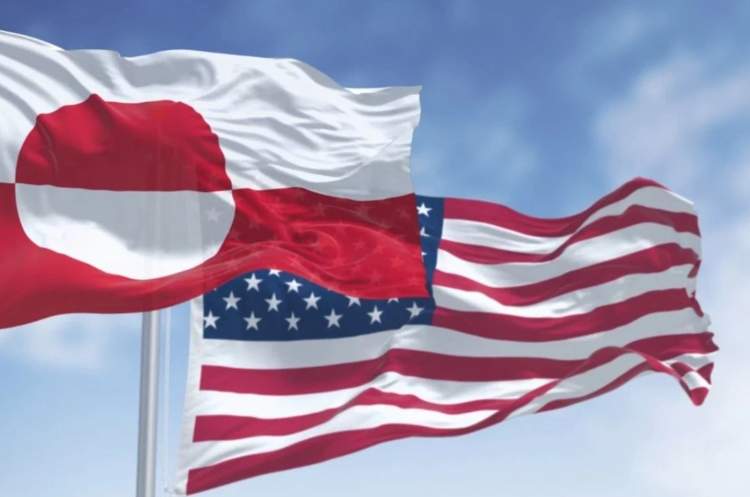
Europe is confronting a strategic shock it assumed belonged to history. When senior aides to the United States president refuse to rule out force to take Greenland, the threat stops being theoretical. It exposes a limit Europe has avoided naming for years. Greenland is a self-governing territory of Denmark, a NATO member. Any attempt to seize it would violate the UN Charter and strike at the political foundations of the Atlantic alliance.
Yet the uncomfortable reality remains. If Washington chooses coercion, Europe’s room to respond is narrow. Law, alliance politics, and military capacity pull in different directions. This matters now because European security still rests on American power, even when that power is used to probe Europe’s own red lines.
READ I World order in flux: Testing US power and limits
Law is clear, but it does not hold ground
International law leaves little room for dispute. Article 2(4) of the UN Charter prohibits the use of force against the territorial integrity of a state. Greenland’s status is not legally uncertain. It is part of the Kingdom of Denmark. Copenhagen controls foreign and security policy. Greenland exercises internal self-government. A forcible takeover would therefore amount to aggression.
Europe would be entitled to object, retaliate, and seek collective remedies. None of this resolves the immediate problem. Law restrains when it is backed by power. Against the United States, Europe has limited capacity to enforce legal norms quickly, particularly in the Arctic. Legal proceedings take time. Sanctions take longer. Both would be contested and asymmetric. The law would remain intact. It would not, by itself, prevent a fait accompli.
READ I US intervention in Venezuela and the Monroe Doctrine
NATO cannot restrain the power it depends on
The crisis exposes a flaw built into the alliance. NATO deters external threats because the United States anchors its military credibility. If that anchor becomes the source of pressure, the treaty offers no clean answer. Article 5 is designed for external attack. It was never drafted to discipline an ally.
Denmark’s warning that an invasion would spell the end of NATO is politically understandable. Strategically, it solves nothing. Europe cannot invoke collective defence against Washington and expect compliance. Nor can it credibly threaten to sideline the United States without dismantling the security structure that protects Europe from the Baltic to the Black Sea. NATO’s procedures would stall. Events would move faster than process.
READ I US intervention in Venezuela threatens rules-based global order
Arctic military realities compress timeline
The military balance is decisive and it favours Washington. The United States already operates the Pituffik Space Base under a 1951 defence agreement. It retains unmatched airlift, satellite coverage, ice-capable platforms, and surveillance in the High North. Denmark’s military presence in Greenland is limited by design. It was never meant to deter a major power.
Europe’s broader Arctic capability is thin and uneven. A rapid NATO exercise might signal concern. It would not block movement. Defence spending figures underline the imbalance. The United States spends roughly 3.4% of GDP on defence. The EU average remains closer to 1.9%. Arctic enablers—icebreakers, space-based early warning, under-ice operations—are overwhelmingly American. In any short confrontation, Europe would be responding to outcomes already set.
Politics narrows Europe’s Greenland response further
Europe’s choices are constrained not only by force but by politics. Ukraine remains the continent’s central security challenge. US military aid, intelligence support, and financial leverage are still decisive. European leaders know that an open clash over Greenland could spill into Ukraine policy, trade relations, or financial coordination.
Early statements backing Denmark mattered. They were also limited. They signalled solidarity without agreement on consequences. This is not hesitation born of fear. It reflects dependence. Europe faces a bleak trade-off: defend principle and risk losing the ally it cannot replace, or de-escalate and absorb coercion. Under sustained pressure, unity would erode.
Negotiation is not weakness; it is damage control
This is why European governments are exploring options that stop short of ownership while expanding US access. Enhanced basing rights. Updated defence agreements. Mineral supply arrangements. These are not gestures of surrender. They are attempts to limit escalation.
Greenland has a population of about 57,000. Denmark provides annual transfers estimated at roughly $1 billion. Any US acquisition would bring welfare, infrastructure, and governance costs that sit uneasily with American domestic politics. Even US analysts note that influence operations are unlikely to persuade Greenlanders, who have consistently said they do not want to become Americans.
Expanded access without annexation already exists under existing agreements. European officials are aware of this. The obstacle is not strategic design. It is the politics of ownership.
The precedent Europe cannot quietly accept
If an ally can be coerced into territorial loss, the consequences will not stop in the Arctic. Europe has argued, repeatedly, that borders cannot be changed by force. That principle underpins its position on Ukraine. A Greenland seizure would hollow it out.
It would also accelerate a shift away from rules toward ad hoc coalitions and bilateral hedging. Europe has spent decades building legal and institutional buffers to offset weaker power. Greenland exposes the limits of that approach when rules collide with hegemony. Once such a precedent is established, it will not remain confined to one island.
Europe may not have good options if Washington chooses force in Greenland. The law would condemn it. NATO would stall. Military balance would decide it. The only workable strategy is prevention. Europe must lock in expanded US access through updated agreements, invest seriously in Arctic capabilities, and keep the issue inside NATO rather than letting it rupture the alliance. The warning is simple. When dependence meets coercion, choice disappears. Once that line is crossed, no alliance clause will restore it.