


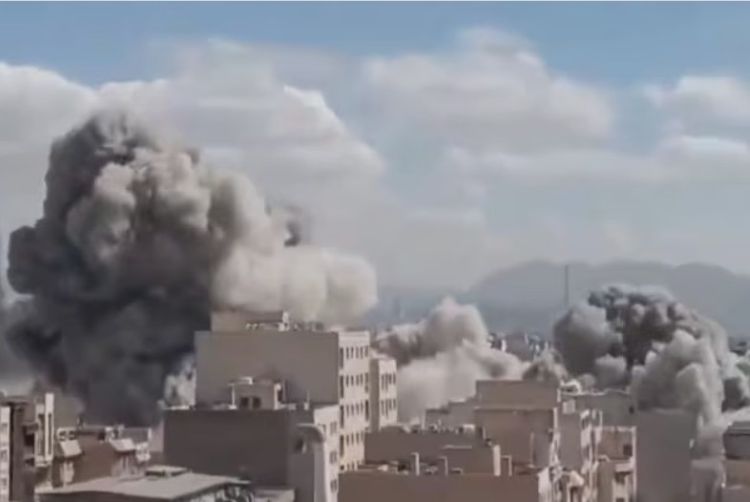
The United States and Israel may well have ended the Islamic Republic in the form the world has known since 1979. The killing of Ayatollah Ali Khamenei, the decapitation of parts of Iran’s command structure, and the widening campaign against military and strategic assets have broken the assumption that the regime’s core would remain untouchable. But that does not lead naturally to the next proposition advanced in Washington and Tel Aviv: that a friendly post-clerical order can now be installed in Tehran. That is the least convincing part of the war narrative.
Regime destruction and regime replacement are not the same enterprise. Air power can kill leaders, degrade infrastructure and induce fear. It cannot by itself create legitimacy, rebuild a chain of command, or settle the question of who governs a country of more than 90 million people with strong state traditions, a large coercive apparatus and a long memory of foreign intervention. Council on Foreign Relations analysts have put the matter bluntly: air strikes alone are very unlikely to produce regime change because unarmed civilians cannot topple a deeply entrenched repressive system such as the IRGC-dominated order.
The first sign of that institutional resilience appeared almost immediately. Reuters reported that a leadership council had assumed power after Khamenei’s death. More important, US intelligence assessments reviewed by Reuters found no evidence that the Islamic Revolutionary Guard Corps had begun to defect, even during the severe protests of January 2026. That matters because revolutions succeed not when a regime becomes unpopular, but when the men with weapons decide not to fire, or choose another side. So far, there is little sign of that threshold being crossed.
READ I Iran conflict will accelerate the global shift away from oil
A pliant regime in post-Khamenei Iran improbable
If the clerical hierarchy weakens, the likely beneficiary is not a liberal coalition waiting in the wings. It is the security establishment. Reuters reported before the strikes that US intelligence assessments had already considered a post-Khamenei succession led by hard-line IRGC figures or equally hard-line clerics. Carnegie’s Karim Sadjadpour and Robin Wright, writing before the present assault, described a regime under pressure but still held together by coercive capacity. That is the more plausible near-term successor structure: less theology perhaps, more praetorianism certainly. A militarised Islamic Republic 2.0 is easier to imagine than a pro-West democratic transition delivered by bombing.
Washington’s own messaging points in the same direction. President Trump first urged Iranians to “take back” their country, implying a regime-change objective. Within days, the stated purpose shifted toward disabling Iran’s nuclear and missile capabilities, while Pentagon officials insisted this was not Iraq and not an endless war. When war aims move this quickly, it is usually because political objectives were never settled. A power vacuum is not a strategy.
READ I Iran conflict exposes India’s oil and trade vulnerabilities
Iran opposition remains divided and weak
That vacuum cannot be filled from abroad by wishful thinking about the opposition. Iran’s exiled opponents are visible but not united. Foreign Affairs has described the opposition as divided. Carnegie has argued that even Reza Pahlavi’s camp has not built the broad-based democratic coalition that real change would require, partly because monarchist ambitions and democratic claims do not sit easily together. Atlantic Council analysts, too, note that Pahlavi is distant from conditions on the ground and lacks broad credibility with both Iranians and US officials. This is not a bench ready for transfer of power.
Even inside Iran, the mood is more complex than outside commentary often assumes. AP reported that some Iranians celebrated Khamenei’s death, but fear and uncertainty remained deep. Reuters and other reporting also show mourning and anger among Shiite communities well beyond Iran’s borders. Hatred of the regime does not automatically translate into support for a foreign-backed replacement, especially in a country where nationalism runs deeper than any one ruling faction. An order installed under American and Israeli air cover would begin its life with a fatal legitimacy deficit.
READ I Iran conflict could trigger a global energy shock
The Libya and Iraq risk is no rhetorical flourish
The more serious danger is not failed democratisation but fragmented sovereignty. Analysts across institutions are converging on the same warning: if the old order breaks before a new one gains authority, Iran could move into prolonged internal violence, with armed factions, ethnic separatists and external patrons all entering the field. Reuters has reported Iranian warnings against “secessionist groups”. The Atlantic Council has described the campaign as one with an abstract objective and no clear endgame. Crisis Group’s early assessment asks the obvious question in its title: regime change or regional war? That is not a semantic distinction. It is the real choice now confronting Washington and Tel Aviv.
Iran is not Libya. It has stronger institutions, deeper bureaucracy and a more coherent national identity. But those strengths cut both ways. They may slow collapse; they may also ensure that any successor order emerges from the existing security state rather than from democratic opposition. The destruction of the Islamic Republic as it existed under Khamenei may therefore produce not a friendly Iran, but a harder, more secretive and more militarised one. That outcome would satisfy neither Washington’s rhetoric nor Israel’s hope that Tehran remains too internally preoccupied to project power.
Oil markets will constrain political engineering
There is another reason the project of installing a friendly regime looks implausible: time. Political engineering requires time, troops, money and patience. The war is already running into energy and market constraints. The U.S. Energy Information Administration says roughly 20 million barrels a day, about 20% of global petroleum liquids consumption, moved through the Strait of Hormuz in 2024.
Reuters reports that Iran has threatened the route, shipping rates have surged, and analysts now see Brent at much higher levels in a prolonged conflict, with some extreme-case projections of $120 to $150 a barrel. The ECB’s chief economist has warned that a lengthy war could raise inflation and reduce growth in Europe. Such pressures do not create space for a long experiment in nation-building. They create incentives for a shorter war and a dirtier political compromise.
That is why the most likely conclusion is also the least triumphant. The US-Israel assault may indeed destroy the Islamic Republic as it has been known for nearly half a century. But breaking a regime is easier than building a state. If the present order falls, the probable alternatives are an IRGC-led hard state, prolonged disorder, or a nationalist backlash against externally sponsored clients. None of these looks like the friendly Iran imagined in war speeches. The clerical republic may be dying. A pro-West replacement is not waiting at the gates.