


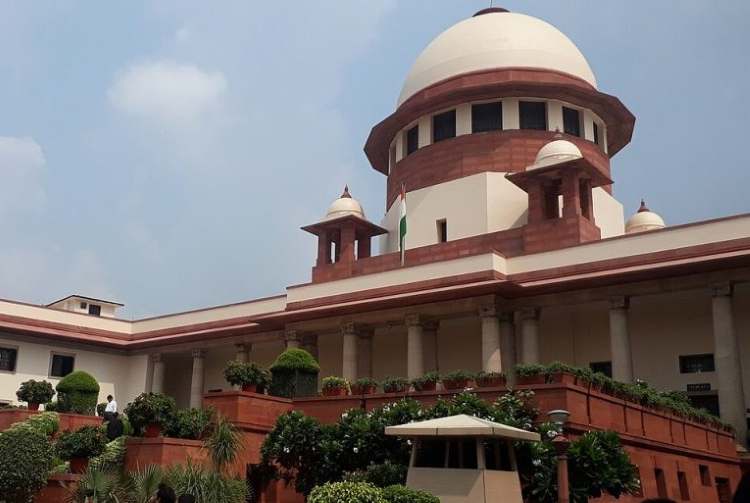
It is unsettling to watch a sitting chief minister argue an election-related dispute before the Supreme Court. Armed with a law degree and decades of political experience, West Bengal Chief Minister Mamata Banerjee appeared before a bench headed by Chief Justice Surya Kant to contest the Election Commission’s conduct of the Special Intensive Revision of electoral rolls ahead of the 2026 state assembly elections. This is not merely a political moment. It is a constitutional one.
Beyond the political controversy lies a deeper and more enduring question: can courts correct electoral wrongs without assuming control over electoral processes themselves? What is at stake is not just a state election, but the delicate equilibrium between judicial review, electoral autonomy and democratic legitimacy.
The SIR is a legally recognised mechanism under Section 21(3) of the Representation of the People Act, 1950, designed to ensure updated electoral rolls, remove duplicates, correct errors and enrol new eligible voters. The Election Commission launched the nationwide Phase II of the SIR in October 2025, covering around 510 million electors across 321 districts.
READ I India’s metals policy must adapt to the Iran conflict
In West Bengal, the exercise became deeply contested almost immediately. Allegations emerged of hurried verification, confusing notices, excessive documentation demands and the large-scale deployment of micro-observers drawn from BJP-ruled states. Reports documented fatalities, hospitalisations and attempted suicides linked to anxiety over voter list deletions.
Over 6.3 million names were removed from the final voters list published on February 28, and a further 6 million voters were issued notices under a new “logical discrepancy” category, many for minor spelling variations arising from transliterating Bengali names into English.
The Commission insists the exercise is neutral, lawful and necessary. It points to violence, intimidation and obstruction of its officials in the state, and contends that the 2025 rolls were compromised by entries for voters who were absent, deceased or had relocated. Both positions, taken on their own terms, carry weight. That is precisely what makes the constitutional questions so difficult to resolve cleanly.
The Commission holds plenary powers to supervise, direct and control elections under Article 324(1) of the Constitution. These powers are broad and intentionally insulating, designed to keep elections free from political interference. But they are not absolute. The Commission’s acts remain subject to judicial review where they are arbitrary, unreasonable or violative of fundamental rights.
In Indira Gandhi v. Raj Narain (1975), the SC held that free and fair elections are part of the Constitution’s basic structure, a principle that cannot be abrogated by any amendment. Judicial intervention is therefore not only permissible but necessary when electoral processes threaten equality, due process or the right to vote enshrined in Article 326.
Competing narratives
Electoral roll revision sits uncomfortably between two competing imperatives. Errors, opacity and overzealous verification can produce exclusions that are difficult, if not impossible, to remedy once an election is over. But excessive judicial micromanagement risks paralysing election administration and undermining the Commission’s constitutional authority. The question, therefore, is not whether courts may intervene, but how far they may legitimately go.
Banerjee’s personal appearance before the SC raises significant institutional questions. She appeared as a petitioner, not as an advocate-on-record, a distinction that matters considerably. Under Bar Council of India Rules, a person holding a full-time salaried government position, including a chief minister, is expected to suspend active legal practice. An appearance as an advocate would have amounted to a breach of professional conduct.
As a petitioner, it is technically permissible, but convention ordinarily requires that a state government initiate or defend legal proceedings through the chief secretary or the relevant department secretary. Symbolism matters in constitutional practice. Courts derive their legitimacy not only from legal correctness but from public perception of independence and distance from political contestation. Deviations from institutional norms, if normalised, may set precedents that strain judicial neutrality in politically charged disputes.
The West Bengal case reflects a broader trend: the growing judicialization of electoral disagreements. Issues once resolved through administrative dialogue – officer deployment, campaign restrictions, scheduling disputes increasingly arrive at the courthouse door. Judicial scrutiny can serve as a vital safeguard against abuse of power, particularly where electoral authorities act opaquely or without procedural fairness.
Yet this recourse is not unlimited. The Representation of the People Act, 1951, expressly bars courts from staying elections once the formal process commences. Serious grievances must ordinarily be pursued after polling through electoral petitions, rather than by interim injunction. This reflects a considered legislative judgement: electoral timelines are constitutionally significant, and disruption caused by pre-election judicial orders can itself threaten democratic stability.
The SIR precedes the formal announcement of elections and the issuance of the Model Code of Conduct, so it may not attract this bar in its full rigour. But courts have consistently held that the closer an administrative action is to the electoral process, the greater the restraint required before intrusive relief is granted.
The SC’s early directions in this litigation protecting voters in the logical discrepancy category, cautioning against notices for trivial spelling errors and suggesting that state officers replace external micro-observers reflect precisely this calibrated approach.
Federal strains and Supreme Court
The dispute also reveals underlying federal strains. While elections are overseen by a central constitutional authority, they are implemented through state machinery. When that trust erodes, even lawful administrative actions acquire a partisan hue. Disagreements over officer deployment, AI-assisted verification and procedural transparency have deepened the centre-state divide.
The structural question remains: does the Election Commission have an obligation to calibrate its administrative choices with sensitivity to local realities? Independence under Article 324 is constitutionally guaranteed and must be preserved. But independence cannot become insulation. Where credible evidence exists that a constitutionally mandated exercise risks causing systematic exclusion of eligible voters, scrutiny is not only permissible but required.
When two constitutional authorities, a state government and the Election Commission are in dispute, the SC is not merely a convenient forum. It is the constitutionally designated arbiter. The objective, however, must be institutional balance, not institutional dominance.
The constitutional difficulty exposed by the SIR dispute is not resolved by choosing between intervention and abstention. Courts must correct illegality without drifting into electoral management. Four principles can guide this balance.
First, process must be the touchstone of review, courts are better suited to examining whether electoral authorities followed fair procedures, issued clear notices, applied uniform standards and recorded reasons than to second guessing the substantive wisdom of administrative choices.
Second, proportionality must govern relief — pre-election intervention should be narrow and corrective, reserved for demonstrable and systemic illegality rather than every procedural imperfection.
Third, timelines are essential – election disputes cannot linger in prolonged litigation, and swift adjudication ensures constitutional questions are settled before they distort the electoral field.
Fourth, courts must remain conscious of their institutional limits — judicial review exists to safeguard the conditions of democratic participation, not to administer elections. The Election Commission’s autonomy under Article 324 exists precisely to keep electoral management free from judicial superintendence.
Getting that balance right matters as much as the outcome of any single election. Democracies are sustained not only by who wins the ballot, but by how faithfully institutions respect the boundaries the Constitution assigns to them. The SC’s role is neither to stand aside when electoral fairness is imperilled, nor to step so far in that it reshapes the field of contest. Its duty is more exacting: to intervene where rights are at risk, to withdraw where administration must function and to preserve the constitutional architecture that keeps power divided and accountable.
The SIR dispute will be resolved through the constitutional process. But the principles articulated in its wake will endure. In times of heightened political contest, constitutional maturity lies not in expanding institutional power, but in exercising it with restraint. Courts correct elections best when they ensure the rules of democracy are honoured and resist the temptation to write those rules themselves.
Shashank Shekhar is Assistant Professor of Law at Lloyd Law College, Greater Noida, Uttar Pradesh. Divya Sridhar is Assistant Professor at Jindal Global Law School, O.P. Jindal Global University, Sonipat, Haryana. Originally published under Creative Commons by 360info
