


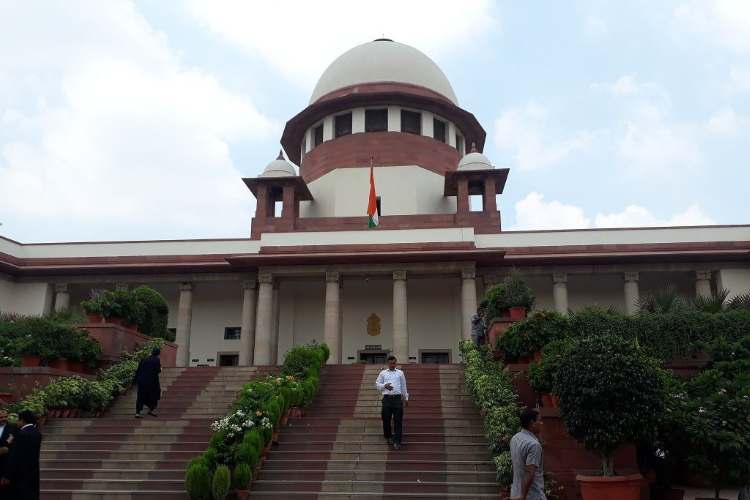
Judicial independence and collegium system reforms: This October, while delivering a judgement on the appointment of judicial officers and advocates as district judges, a five-judge Constitution Bench of the Indian Supreme Court sought to strengthen institutional capacity by broadening the merit-based recruitment system. It raises significant concerns on judicial governance and institutional design that could impact judicial autonomy.
The appointment of lawyers and pleaders as district judges has not received as much attention as the elevation of senior members of the bar to the bench. District judges are appointed under Article 233 of the Constitution, with the process involving advocates and “in-service” judicial officers with a minimum of seven years of experience.
READ I Climate diplomacy must account for domestic inequalities
Judicial independence debate has intensified
But the appointment of judges to the Supreme Court and High Courts follows a procedure involving the collegium system in which judges hold sway over their own appointments in the higher judiciary. This limits the executive’s control over appointments. However, there are no publicly available criteria for selecting or rejecting candidates.
Recently, an alleged case of corruption involving a High Court judge and calls for his impeachment shone the spotlight on the related issues of judicial propriety, independence and accountability. Like the executive and the legislature, the judiciary is not exempt from accountability to the people it serves. Judicial independence is “not an end in itself” and judges are neither above the law nor less accountable than government officials.
The Constitution drafters incorporated several provisions to ensure judicial autonomy. Articles 124 to 147 deal with the Supreme Court, and Articles 214 to 231 deal with High Courts. These provisions cover aspects such as mode of appointment, security of tenure and protection of salaries and service conditions.
The Directive Principles of State Policy under Article 50 of the Indian Constitution enshrines the separation of powers principle to ensure that the judiciary remains independent from political, executive or other external influences. An independent judiciary not only upholds the rule of law but also protects against abuse and misuse of power.
In this light, recent reforms, such as the three-year practice rule for judicial aspirants, along with the precedents surrounding the collegium system—including cases such as S.P. Gupta v. Union of India and the Second, Third judges and the National Judicial Appointments Commission (NJAC) case—manifest the evolving landscape of judicial independence in India.
Judges’ appointments in India
Judges are appointed by the President, but with the critical involvement of the judiciary itself through the collegium system, developed through judicial pronouncements such as S.P. Gupta v. Union of India (1981), a landmark case involving the judiciary-executive tussle over appointments. It emphasised executive primacy in judicial appointments and transfers, stating that the President (effectively, the executive) was not bound by the Chief Justice of India’s recommendations.
The judiciary reversed this interpretation in subsequent cases. The Second Judges Case (1993) reversed this ruling, stating that the CJI’s opinion should have primacy. It also initiated the collegium system by which the CJI would make recommendations in consultation with the two senior-most judges of the Supreme Court. Next, the Third Judges Case (1998) expanded the collegium to include the four senior-most judges. While the collegium system ensured judicial primacy in appointments, it was criticised for being opaque and lacking accountability.
Subsequently, the government passed the 99th Constitutional Amendment and the National Judicial Appointments Commission Act in 2014, which sought to replace the collegium system and to also include members from the executive and civil society.
In the Supreme Court Advocates-on-Record Association v. Union of India (2015) case, the apex court struck down the NJAC as unconstitutional for undermining the basic structure of the Constitution in relation to judicial independence, reasserting judicial primacy in appointments. In a dissenting note, one of the judges supported the NJAC, calling for accountability within the judiciary and balancing it with judicial independence.
These cases collectively define the contours of judicial independence through appointment and transfer mechanisms. The collegium system has now been restored, and steps are being taken to ensure more transparency in judicial appointments. However, the question of guaranteeing accountability remains significant, with the need for reform in the process of judicial appointments.
In 2023, the Supreme Court upheld a rule introduced by several High Courts, mandating that candidates seeking recruitment as judicial officers (civil judges) must have at least three years of actual legal practice. This rule, initially challenged as exclusionary, was upheld on the grounds that practical courtroom experience empowers the judicial process.
In upholding this rule, the apex court emphasised that mere enrolment with a bar council is insufficient; the candidate must have engaged in real-time practice. This development strengthens judicial independence by ensuring that entrants to the judiciary are better equipped to understand the practical nuances of law.
Addressing internal challenges
Despite its robust constitutional design, the Indian judiciary faces several challenges. Lack of transparency in the collegium system, delays in appointments and the growing backlog of cases continue to affect public perception of the judiciary. The recent move to ensure experienced advocates enter the judiciary through the three-year rule is a welcome step. However, it must be supplemented with structured judicial training.
By clearing the path for judicial officers with seven years’ bar experience to be appointed as district judges, the Supreme Court has reduced the bottlenecks and stagnation of career progression faced by the officers. Still, the absence of clear rules regarding appointment, seniority and promotions may result in internal tensions and dissatisfaction that can impact judges’ independence.
Transparent and objective criteria of appointment and promotions at all levels in the judiciary are a step in the right direction to achieve judicial integrity. Still, other significant questions of judicial governance and institutional design are equally essential to ensure effective judicial independence.
Judicial independence is not a static concept but an evolving commitment to fairness and justice to uphold constitutional values. India’s constitutional framework, backed by judicial pronouncements, has preserved the sanctity of this institution. However, reforms must continue to address internal weaknesses without compromising autonomy. The journey from S.P. Gupta to the three-year rule reflects an evolving judiciary dealing with its responsibilities in a complex democracy.
A truly independent judiciary does not stand alone but commands respect through transparency, integrity and accountability. The coming times will test how well India balances these imperatives to protect the third pillar of its democracy.
Amit Upadhyay is Associate Professor, Jindal Global Law School, O.P. Jindal Global University, Sonipat, Haryana. Abhinav Mehrotra is Associate Professor, Jindal Global Law School, O.P. Jindal Global University, Sonipat, Haryana. Originally published under Creative Commons by 360info
